


Best Clean Beauty Brands for Beginners: 2026 Guide
Table of Contents
- What Defines a Clean Beauty Brand in 2026?
- Quick Comparison: Top Clean Beauty Brands for Beginners
- Clean Beauty Ingredients to Avoid on Your First Label Read
- How to Transition to Clean Beauty Without Wasting Money
- Clean Beauty Starter Kit Essentials for a Simple Routine
- Why Performance Matters: Clean Formulas That Actually Work
- Common Mistakes to Avoid When Switching to Clean Beauty
- Conclusion: Your First Clean Beauty Purchase
- Frequently Asked Questions
Last Updated: September 6, 2026
What Defines a Clean Beauty Brand in 2026?
In 2026, a clean beauty brand is defined by full ingredient transparency, verifiable cruelty-free commitments, and a genuine focus on skin health rather than marketing hype.
The term "clean" is not regulated by the FDA, so the burden falls on you to decode labels and verify claims (the FDA). This guide breaks down how to spot trustworthy brands, what to avoid, and how to build a routine that works for your skin and budget.
Quick Comparison: Top Clean Beauty Brands for Beginners
Every brand claims to be "clean." The table below cuts through the noise, comparing our top pick against the general categories you will encounter.
| Brand / Type | Focus | Best For | Price Range |
|---|---|---|---|
| Blush Boutique | Curated clean, cruelty-free essentials | Beginners wanting a simple, safe routine | $18.95 - $41.95 |
| "Big Box" Retailers | Broad selection, mixed standards | Shoppers who want to browse many labels | Varies widely |
| "Luxury" Natural Lines | High-end botanicals and packaging | Those with a larger budget for premium feel | $50+ |
| "Drugstore" Naturals | Basic natural ingredients | Quick, budget-friendly single purchases | Under $20 |
Most guides treat every brand the same, but the real difference comes down to curation and standards. A curated shop like Blush Boutique's clean beauty collection does the label decoding for you, filtering out products with questionable ingredients before they reach your cart. This is especially valuable for beginners who have not yet built the skill of scanning an ingredient list for red flags like parabens, phthalates, and synthetic fragrance.
Our top pick for most beginners is Blush Boutique: the selection is approachable, each product is chosen for its gentle, effective formula and cruelty-free status, and the 30-day money-back guarantee makes the first switch risk-free.
Clean Beauty Ingredients to Avoid on Your First Label Read
The "Toxic 5" for beginners are parabens, phthalates, synthetic fragrance, sulfates, and formaldehyde releasers, common in conventional cosmetics and frequently linked to skin irritation, hormone disruption, and other health concerns.
- Parabens: Used as preservatives; look for words ending in "-paraben" (methylparaben, propylparaben).
- Phthalates: Often hidden in "fragrance"; used to make scents last longer.
- Synthetic Fragrance: A catch-all term that can mask dozens of undisclosed chemicals.
- Sulfates (SLS/SLES): Harsh detergents that strip the skin's natural moisture barrier.
- Formaldehyde Releasers: Preservatives like DMDM hydantoin or diazolidinyl urea that slowly release formaldehyde.
Mastering this short list is the first step in label decoding. It helps you to make safer choices whether you shop with us or anywhere else. For a deeper understanding of ingredient safety and environmental impact, the Environmental Working Group's Skin Deep database is a valuable, independent resource for cross-checking specific products.
How to Transition to Clean Beauty Without Wasting Money
Transitioning does not mean throwing away your makeup bag in one afternoon. Use the "replace-as-you-run-out" method: when your conventional foundation runs out, replace it with a clean alternative. This spreads the cost over months and prevents waste.
Avoid buying a full new routine at once. Start with the product you use most often or the one that sits on your skin the longest, like a serum or foundation.
Before you buy, identify your skin concern (dryness, dullness, sensitivity); look for active botanicals that target it, not just trendy ingredients; and check the preservative system.
Clean Beauty Starter Kit Essentials for a Simple Routine
Overwhelmed by the number of products and brands? The fix is not to buy more, but smarter. Build a beginner's routine on just five versatile products, your 'first five' roadmap.
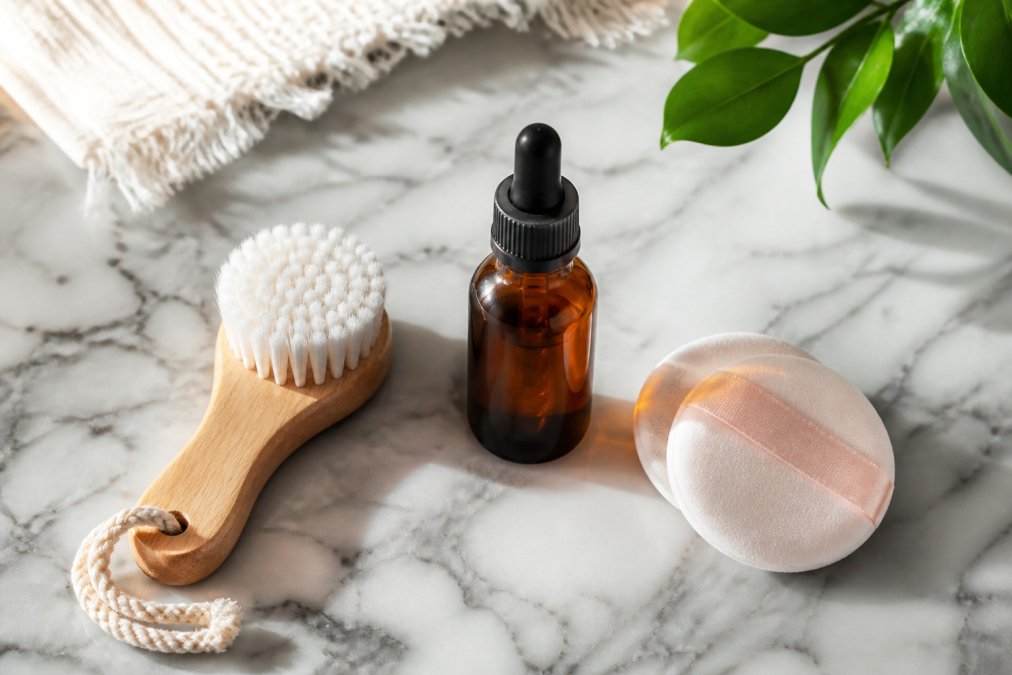
The First Five: A Logical Order of Purchases
You don't need to buy all five at once. Start with the product offering the most immediate impact on your skin's health, then build out.
1. The Gentle Cleanser ($10-$20): This is your non-negotiable first purchase. A clean cleanser removes dirt, oil, and makeup without stripping your skin's moisture barrier. Look for cream or gel-based formulas with ingredients like aloe vera, glycerin, or chamomile. Avoid anything with sulfates (SLS/SLES) or a high percentage of essential oils, which can be irritating.
2. The Hydrating Serum ($15-$30): This is where you address your specific skin concern. For most beginners, a serum with hyaluronic acid is a safe, effective starting point. If your concern is dark spots or uneven tone, look for one with vitamin C or niacinamide. The Turmeric Radiance Serum at $19.95 is a strong choice here, using curcuma longa extract to target hyperpigmentation.


3. The Daily Moisturizer ($15-$25): A moisturizer locks in the benefits of your serum. For daytime, a lightweight lotion is often enough; for nighttime, a slightly richer cream can support skin repair. Look for non-comedogenic labels and ingredients like squalane or shea butter.
4. The Mineral SPF ($15-$30): This is the most critical anti-aging step, and often the one beginners skip. A daily SPF of 30 or higher protects against UV damage and prevents dark spots (the American Academy of Dermatology). Choose a mineral-based formula with zinc oxide or titanium dioxide.
5. The Multi-Tasker (Optional, $20-$40): Once you have the first four down, add a product that simplifies your routine, like a tinted moisturizer with SPF or a cream blush. The Sonic Cleansing Beauty Brush at $41.95 fits here as a tool that elevates your cleanse and helps your serum absorb better, but it's not required to start.

The Budget-Friendly Strategy: 'Clean on a Dime'
The biggest barrier is often the price tag, but a full routine doesn't have to cost hundreds.
- Splurge on what stays on your skin: Your serum and moisturizer are absorbed into your skin, so investing in higher-quality active ingredients here makes sense.
- Save on what washes off: A cleanser's job is to clean, not to deliver anti-aging benefits. A basic, gentle formula from a drugstore 'natural' line is often just as effective as a luxury one.
- Look for multi-purpose products: A tinted moisturizer with SPF replaces three separate products, saving you money and counter space.
How to Track Shelf-Life and Avoid Waste
Clean products often use gentler preservatives, so they can expire faster than conventional ones. Manage this with the following steps:
- Find the PAO Symbol: Look for the small jar icon on the back of the package. The number inside (e.g., '6M' or '12M') tells you how many months the product is good after opening.
- Write the Open Date: Use a piece of tape or a permanent marker to write the date you first opened the product on the bottom of the bottle. This simple habit prevents guesswork.
- Store Properly: Keep products away from direct sunlight and heat. A cool, dry place like a drawer is better than a sunny bathroom windowsill.
- Watch for Changes: If the color, smell, or texture changes, or if it starts to separate, it's time to toss it, even if it's before the PAO date.
By following this 'first five' roadmap and being mindful of your budget and shelf-life, you can build a clean beauty routine that is effective, affordable, and sustainable, without the overwhelm.
Why Performance Matters: Clean Formulas That Actually Work
The old criticism that clean beauty did not perform, chalky, patchy, lacking staying power, is outdated. Modern, performance-driven clean formulas rely on better technology and bio-compatible ingredients to deliver the coverage and long-wear results you expect.
Performance is not just about pigment; it's about how the formula interacts with your skin barrier. A clean foundation with skin-nourishing oils will sit better and last longer than one relying on silicones to smooth over dryness.
Customer feedback supports this shift. Blush Boutique customer Ava M. called our mascara the "Best mascara i've used in months. Makes lashes look longer without clumps," proving clean formulas can compete with conventional counterparts.
Common Mistakes to Avoid When Switching to Clean Beauty
Beyond the common advice to 'go slow,' beginners need to understand their skin's unique sensitivities. This section covers the pitfalls that cause the most trouble.
The Overlooked Allergens in 'Clean' Products
The biggest mistake is assuming 'clean' means 'hypoallergenic.' Many natural ingredients are potent allergens. Beginners often switch to a 'natural' product, experience redness or breakouts, and wrongly conclude clean beauty doesn't work, when they may be reacting to a specific botanical.
Here are the most common irritants hiding in clean formulas:
- Essential Oils: While natural, oils like lavender, eucalyptus, peppermint, and citrus are frequent causes of contact dermatitis. If you have sensitive skin, look for 'fragrance-free' products, which should also be free of essential oils.
- Fragrance (Even 'Natural' Fragrance): Any term like 'parfum' or 'fragrance' on a label can be a complex mixture of dozens of chemicals. Choose products labeled 'fragrance-free' rather than 'unscented,' as 'unscented' products may still contain masking fragrances.
- Botanical Extracts: Ingredients like citrus extracts (often used as preservatives) or certain flower extracts can be sensitizing. A product with a long list of plant extracts just has more potential allergens.
- Sodium Benzoate and Potassium Sorbate: These are common, safer preservatives, but a small percentage of people are sensitive to them. If you have a known sensitivity, look for products that use phenoxyethanol or ethylhexylglycerin instead.
The 'Purging' vs. 'Reaction' Confusion
When you switch to a new active ingredient, like a vitamin C serum or an AHA/BHA exfoliant, your skin may go through a 'purging' phase. This looks like small, closed comedones or whiteheads that come to the surface faster than usual, and should subside within 4-6 weeks.
This is often confused with an allergic reaction. The key difference is location and sensation:
- Purging: Occurs in areas where you typically break out. It does not itch or burn.
- Allergic Reaction: Can occur anywhere, often on areas that were clear. It is typically accompanied by itching, burning, stinging, or redness.
The Patch Test Protocol You Should Actually Follow
A proper patch test takes 48 to 72 hours on a sensitive area like the inside of your wrist or behind your ear. Apply a small amount twice a day for three days; if there is no reaction, it is likely safe for your face.
For a more accurate test, apply to a small area on your jawline or cheek, as facial skin is more reactive than your wrist.
The 'One-at-a-Time' Rule, Made Practical
When you start a new product, use it for at least two weeks before adding another. This gives your skin time to adjust and lets you identify the culprit if a reaction occurs.
A Transition Timeline to Keep You on Track
| Mistake | Why It Happens | Better Approach |
|---|---|---|
| Switching everything at once | Excitement to go clean | Swap one product at a time, waiting 2 weeks between changes |
| Ignoring the PAO symbol | Unfamiliar with the icon | Check the jar icon; write the open date on the bottle |
| Trusting marketing claims | 'Natural' is unregulated | Read the full ingredient list, not just the front label |
| Buying the wrong skin type | Not checking the formula base | Match products to your specific concern (dry, oily, sensitive) |
| Assuming 'clean' = 'hypoallergenic' | Not knowing common irritants | Look for 'fragrance-free' and check for essential oils |
| Confusing purging with a reaction | Not knowing the difference | Purging is in breakout areas; a reaction itches and burns |
By understanding these allergens and following a clear protocol, you can navigate the switch to clean beauty with confidence.
Conclusion: Your First Clean Beauty Purchase
Your first clean beauty purchase should be a single, versatile product that addresses your top skin concern, letting you test the waters without overhauling your routine or budget.
At Blush Boutique, we make that first step easy. Our curated collection of clean, cruelty-free products is designed for real life and real skin, with gentle formulas safe for daily use. Start with the Turmeric Radiance Serum at $19.95 to target dark spots, or the Radiant Glow Essence with Hyaluronic Acid for deep, plumping hydration. With fast shipping, easy support, and a 30-day money-back guarantee, you can shop with confidence. Get started with Blush Boutique and build a routine that makes you glow every day.
Frequently Asked Questions
Which is the cleanest beauty brand?
There is no single 'cleanest' brand, but the best clean beauty brands for beginners share key traits: they publish full ingredient lists, avoid the most common toxins like parabens and phthalates, and hold third-party certifications for cruelty-free or vegan formulas. Look for brands that explain their clean standard openly. For a curated starting point, Blush Boutique screens every product for synthetic fragrance, parabens, and phthalates, so you can trust the label without doing hours of research.
What makeup brand is best for beginners?
The best makeup brand for beginners is one that offers multi-use products with forgiving formulas. You want items that blend easily, do not require advanced technique, and work across skin types. Brands that label products as non-comedogenic and hypoallergenic reduce the guesswork. Start with a tinted moisturizer, a cream blush, and a tubing mascara. These three products build a complete look and are much easier to apply than full-coverage foundation or liquid eyeliner.
How do I start a clean beauty routine?
Start by using up what you already own, then replace items one at a time as they run out. Begin with the product that touches the most skin: your cleanser or foundation. Before buying, cross-check the ingredient list against common offenders like parabens, phthalates, and synthetic fragrance. Look for a clean beauty starter kit that includes a gentle cleanser, a hydrating serum, and a daily moisturizer. This keeps your routine simple while you learn what your skin responds to.
Are clean beauty products less effective than conventional ones?
No. Early clean beauty formulas had performance gaps, but that changed. Modern clean brands use active botanicals, vitamins, and mineral-based pigments that perform just as well as synthetic alternatives. The key is choosing products designed for your skin type and concern. For example, a vitamin C serum from a clean brand still delivers the same brightening benefits as a conventional one. Read reviews from people with similar skin to confirm real-world results before purchasing.