


Clean Skincare vs Conventional Brands: What Actually Matters
Table of Contents
- Clean Skincare vs Conventional Brands: The Real Differences
- Quick Comparison: Clean vs. Conventional Skincare
- What Does "Clean" Actually Mean? Ingredient Transparency Explained
- Clean Beauty Ingredient Safety: What the Science Says
- Do Clean Products Perform? A Look at Clean Skincare Efficacy Studies
- Shelf Life, Preservatives, and Skin Barrier Health
- How to Transition to Clean Skincare Without Breaking Out
- The Verdict: Which One Should You Choose?
- Frequently Asked Questions
Last Updated: September 9, 2026
Clean Skincare vs Conventional Brands: The Real Differences
The debate between clean skincare vs conventional brands often feels less like a shopping decision and more like a philosophical argument. Clean skincare prioritizes ingredient transparency and excludes certain synthetic compounds, while conventional brands rely on a broader palette of lab-developed ingredients chosen for cost, stability, or performance.
The real issue is that "clean" has no legal definition, so every brand writes its own rules. This guide cuts through the marketing hype to compare what goes into your bottles, how products perform, and why your skin barrier should be the ultimate judge.
Quick Comparison: Clean vs. Conventional Skincare
Before diving into the nuance, here's the executive summary. Clean skincare prioritizes plant-derived ingredients and excludes specific synthetic chemicals like parabens, sulfates, and phthalates. Conventional skincare optimizes for clinical efficacy and formulation stability, often using synthetic compounds to deliver active ingredients deeper into the skin.
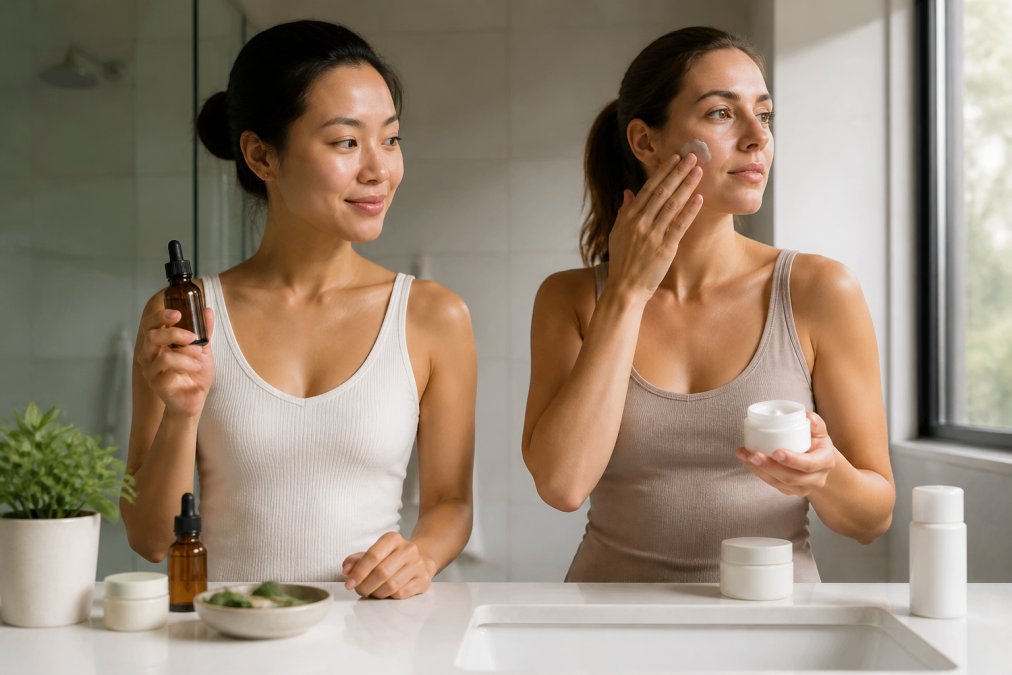
| Factor | Clean Skincare | Conventional Brands |
|---|---|---|
| Ingredient Philosophy | Excludes certain synthetics, plant-focused | Performance-first, synthetic allowed |
| Preservatives | Limited options, shorter shelf life | strong systems, long stability |
| Regulatory Oversight | Self-regulated, no legal definition | FDA-regulated for safety |
| Skin Barrier Impact | Gentle, but variable by formula | Effective, can be harsh if over-formulated |
| Best For | Sensitive skin, eco-conscious buyers | Targeted clinical concerns |
A conventional product isn't automatically dangerous, and a clean product isn't automatically safe. Both categories contain excellent formulas and problematic ones; the difference lies in how each defines its priorities.
What Does "Clean" Actually Mean? Ingredient Transparency Explained
Clean skincare is a marketing term, not a scientific or regulatory one. Unlike "hypoallergenic" or "dermatologist-tested," which carry specific implications, "clean" has no legal definition in the United States. The FDA's stance on cosmetic labeling confirms that cosmetic products do not require premarket approval, meaning brands self-police their ingredient choices.
This regulatory gap creates a confusing landscape: one brand's clean list bans 50 ingredients; another bans 2,000. Ingredient transparency is where clean brands genuinely shine, most publish full ingredient lists with the purpose of each compound. But "transparency" doesn't equal "safety." Poison ivy extract is natural and transparently labeled, yet you wouldn't put it on your face. The clean beauty movement deserves credit for pushing clearer labeling, but consumers still need label literacy skills.
Clean Beauty Ingredient Safety: What the Science Says
The scientific reality of clean beauty ingredient safety is more complex than marketing suggests. Many ingredients that clean brands avoid, like parabens, are actually effective preservatives with decades of safety data. The concern around them stems from studies showing estrogenic activity, but the FDA's guidance on parabens notes that current evidence doesn't establish a direct link to harm at the concentrations used in cosmetics.
Conversely, "natural" doesn't automatically equal safe. Botanical extracts can trigger contact dermatitis, and essential oils are among the most common causes of allergic reactions in skincare. What matters more than the natural-versus-synthetic label is toxicology: the dose, concentration, and delivery system. A well-formulated synthetic active at the correct pH can be gentler than a poorly formulated botanical extract.
The 'Clean' vs. 'Clinical' Dichotomy: A Third Path
A third category has emerged: clinical clean. These brands reject the 'natural is always better' premise while still avoiding parabens, phthalates, and synthetic fragrances. Instead, they use lab-grown actives, bio-identical ceramides, fermented botanicals, and synthetic peptides, produced in controlled environments for purity and consistency.
This approach sidesteps the central weakness of both camps. Conventional brands may include unnecessary fillers or harsh surfactants; clean brands often struggle with stability and efficacy because they limit preservative options. Clinical clean brands argue the real issue isn't a molecule's origin but its safety profile, stability, and proven efficacy.
Consider vitamin C. Conventional brands often use ascorbic acid at a low pH (below 3.5) for maximum penetration, which can sting. Clean brands frequently use magnesium ascorbyl phosphate, a gentler but less potent derivative. Clinical clean brands might use ascorbic acid paired with a buffering system and ferulic acid to stabilize it at a skin-friendly pH, achieving efficacy without irritation.

This third path is gaining traction because it addresses real consumer demand: products that are both safe and effective.
The Sensitization Risk of Botanical Extracts
The clean beauty movement's preference for botanical extracts introduces a hidden risk: sensitization. Essential oils like lavender, tea tree, and citrus are common in clean formulas but are among the most frequent allergens in patch testing.
The issue is compounded by oxidation. When essential oils are exposed to air, they degrade into more potent allergens. A fresh bottle of citrus-scented moisturizer may be fine, but a six-month-old bottle that has been opened repeatedly can trigger contact dermatitis. A common pattern is that consumers switch to a clean product, experience breakouts or redness, and assume their skin is 'purging.' In reality, they may be experiencing irritant contact dermatitis from a botanical extract. The American Academy of Dermatology's guidance on contact dermatitis notes that natural ingredients are a leading cause of allergic reactions in cosmetics.
The Dose Makes the Poison
Toxicology's foundational principle is that the dose makes the poison. Water is lethal in excess; botulinum toxin is used in cosmetics at microdoses. This principle is often lost in clean beauty marketing, which focuses on the presence or absence of a single ingredient rather than its concentration and context.
Take formaldehyde, banned in the EU and restricted in the US. It is a known carcinogen at high exposure levels, but trace amounts in cosmetics are far below the threshold for harm. The FDA allows formaldehyde-releasing preservatives like DMDM hydantoin at concentrations up to 0.2%, considered safe by the Cosmetic Ingredient Review panel. Conversely, some botanical ingredients have no safety data at all. By avoiding well-studied synthetics, clean brands may be replacing them with less-studied naturals.
The Regulatory Divide: EU vs. US
A major driver of the clean beauty movement is the regulatory gap between the EU and the US. The EU's Cosmetics Regulation (EC) No 1223/2009 bans or restricts over 1,300 ingredients, while the US FDA has banned or restricted only 11 since 1938. A product sold in the US may contain ingredients that are illegal in Europe.
The clean beauty movement has capitalized on this gap, but the framing is misleading. The EU's stricter regulations apply to all cosmetics sold in Europe, including those from US-based conventional brands like L'Oreal or Estee Lauder, which must reformulate for the European market.
This regulatory breakdown explains why the 'clean' label is more prominent in the US than in Europe. European consumers do not need to seek out 'clean' brands because their government has already banned the most concerning ingredients. In the US, the burden falls on the consumer to navigate a self-regulated market. For US consumers, this means that label literacy is essential. The FDA's authority over cosmetics is limited to post-market enforcement, which is reactive rather than proactive.
Do Clean Products Perform? A Look at Clean Skincare Efficacy Studies
The performance gap between clean and conventional products is shrinking but hasn't disappeared. Conventional brands held a clear advantage in active ingredient delivery because they could use penetration enhancers and stable synthetic forms of vitamins and antioxidants. Clean brands often struggle with formulation stability, particularly with vitamin C, which degrades quickly without specific stabilizers.
That said, clinical efficacy in clean skincare has improved dramatically. Many clean brands now use encapsulated ingredients and advanced delivery systems that rival conventional technology. The honest assessment is that clean products perform excellently for hydration, gentle exfoliation, and barrier support, but may lag in prescription-strength concerns like severe acne or hyperpigmentation, where conventional actives like hydroquinone or high-concentration retinoids remain the gold standard.
Shelf Life, Preservatives, and Skin Barrier Health
Preservatives exist to protect you. The clean beauty movement's war on parabens created a vacuum, and brands filled it with alternatives. Some, like phenoxyethanol, are perfectly safe. Others, particularly certain essential oils used for their antimicrobial properties, come with higher irritation risks.
The practical consequence is shelf life. Conventional products with strong preservative systems typically last 24 to 36 months; clean products without traditional preservatives often last 6 to 12 months. A $40 clean moisturizer that expires in 6 months costs more per use than a $40 conventional one that lasts 2 years.
Microbial contamination is the real danger. Products without adequate preservative systems can harbor bacteria and mold, which cause breakouts, infections, and contact dermatitis. The FDA's guidance on microbial contamination in cosmetics emphasizes that contaminated products pose serious health risks. When evaluating clean skincare, check whether the brand uses a verified preservative system, even if it's not a paraben. Your skin barrier health depends on applying products that are microbiologically safe, not just free of certain chemicals.
The Chemistry of Preservation: Why Parabens Were So Effective
Parabens (methylparaben, propylparaben, butylparaben) are esters of para-hydroxybenzoic acid, used in cosmetics since the 1920s because they are broad-spectrum antimicrobials effective against both bacteria and fungi across a wide pH range. The Cosmetic Ingredient Review (CIR) panel has concluded they are safe at concentrations up to 25%, far above the typical 0.3% to 1% used in cosmetics.
The controversy began in 2004 when a study by Darbre et al. detected parabens in breast tumor tissue. The study was widely criticized for methodological flaws, it did not include a control group, and it could not establish causation. Nevertheless, the media coverage sparked consumer fear, and the clean beauty movement capitalized on it. The FDA's position, stated in its guidance on parabens, is that it does not have evidence that parabens at the concentrations used in cosmetics are harmful.
Parabens were so effective that removing them created a formulation crisis. The most common replacements, phenoxyethanol, ethylhexylglycerin, and sodium benzoate, each have limitations: phenoxyethanol is less effective against fungi, ethylhexylglycerin is a weak antimicrobial that must be combined with others, and sodium benzoate only works at a pH below 5.5.
The Hidden Cost of Short Shelf Life
The economic math of shelf life is rarely discussed but significant. Consider two moisturizers, both priced at $40. A conventional product with a 24-month shelf life costs $1.67 per month of use; a clean product with a 6-month shelf life costs $6.67 per month, four times as much. Over a year, the clean product costs $80 versus $20 for the conventional one.
This cost difference is compounded by the fact that many clean products require refrigeration or opaque packaging to extend stability. There is also the environmental cost: a product that expires in 6 months is more likely to be discarded before it is fully used, contributing to packaging waste. A shorter shelf life means more frequent purchases, more packaging, and more shipping emissions.
The Skin Barrier: Your First Line of Defense
The skin barrier, or stratum corneum, is the outermost layer of the skin. It consists of corneocytes embedded in a lipid matrix of ceramides, cholesterol, and free fatty acids, acting as a physical barrier that prevents water loss and blocks microorganisms and irritants. It also has a slightly acidic pH of 4.5 to 5.5, which inhibits pathogenic bacteria growth.
Preservatives play a critical role in maintaining skin barrier health by preventing microbial overgrowth in the product itself. When a product is contaminated, the bacteria or mold can disrupt the skin's microbiome, leading to dysbiosis. This imbalance can trigger inflammation, breakouts, and a compromised barrier. A common pattern in dermatology is that patients with sensitive skin switch to 'clean' products to avoid irritation, only to find that their skin becomes more reactive. The culprit is often a lack of adequate preservation, leading to microbial contamination, or the use of essential oils as natural preservatives, which are themselves irritants. The National Eczema Association's guidance on skincare ingredients recommends that people with eczema avoid products with essential oils, even though they are natural, because they can trigger flares.
How to Evaluate a Preservative System
When reading an ingredient label, look for the presence of preservatives. A product that claims to be 'preservative-free' is a red flag unless it is single-use or has a very short shelf life (under 3 months). Signs of an adequate preservative system include:
- Phenoxyethanol at 0.5% to 1%: Effective against bacteria but weaker against fungi, so it is often paired with ethylhexylglycerin.
- Ethylhexylglycerin at 0.1% to 0.5%: A mild antimicrobial that enhances the efficacy of phenoxyethanol.
- Sodium benzoate at 0.1% to 0.5%: Effective at pH below 5.5, common in water-based formulas.
- Potassium sorbate at 0.1% to 0.5%: Effective against fungi, often used in combination with sodium benzoate.
- Benzyl alcohol at 0.5% to 1%: A preservative that also has a slight astringent effect.
Avoid products that rely solely on essential oils for preservation. While some, like tea tree oil, have antimicrobial properties, they are not effective enough at safe concentrations to prevent contamination over a 6- to 12-month period.
The Cost-Benefit Analysis: Clean vs. Conventional Over Time
Consider a 12-month comparison of two identical serums, one clean and one conventional, both priced at $50 for 30 ml.
| Factor | Clean Serum | Conventional Serum |
|---|---|---|
| Shelf life | 6 months | 24 months |
| Bottles needed per year | 2 | 1 |
| Annual cost | $100 | $50 |
| Preservative system | Phenoxyethanol + ethylhexylglycerin | Parabens |
| Stability of active (vitamin C) | May degrade after 3 months | Stable for 24 months |
| Risk of contamination | Moderate if not stored properly | Low |
This table illustrates the trade-off. The clean serum costs twice as much annually and requires more careful storage, but it avoids parabens, which some consumers prefer for personal reasons. For most people, the best approach is to evaluate each product individually. A clean product with a robust preservative system and a shelf life of 12 months or more can be a good choice; one with a 3-month shelf life and no preservatives is a poor value and a potential safety risk.
The Role of Packaging in Preservation
Packaging is an often-overlooked factor in shelf life. Airless pumps and tubes minimize exposure to air and bacteria, extending a product's life. Jars expose the product to air and introduce bacteria every time you dip your fingers in. A clean product in a jar without a robust preservative system is a recipe for contamination.
Look for products in airless pumps or tubes, especially if they contain water, which is a breeding ground for bacteria. Water-free products, such as oil-based serums or balms, have a lower risk of microbial growth but can still oxidize over time. The FDA's guidance on cosmetic packaging recommends that consumers avoid using products past their expiration date and store them away from heat and direct sunlight.
How to Transition to Clean Skincare Without Breaking Out
Switching your entire routine overnight is the fastest route to a purge breakout. Many people interpret this as their skin "detoxing," but what's actually happening is irritation from suddenly removing familiar ingredients and introducing new botanical extracts. Your skin needs time to adapt.
Follow this phased transition plan to minimize disruption:
- Start with your cleanser. Replace it first since it's on your skin for the shortest time. This introduces one variable at a time.
- Wait two weeks. Monitor for irritation, dryness, or breakouts before changing anything else.
- Swap your moisturizer next. This is your skin barrier's main support, so choose one with ceramides or hyaluronic acid.
- Introduce active serums last. Vitamin C and turmeric-based products can cause purging if your skin isn't acclimated.
- Patch test everything. Apply a small amount behind your ear or on your jawline for 72 hours before full application.
For a gentle starting point, the Turmeric Radiance Serum from Blush Boutique is formulated with curcuma longa extracts to target dark spots without harsh chemicals. At $19.95, it's a low-risk introduction to clean actives, designed for sensitive skin. Pair it with the Radiant Glow Essence with Hyaluronic Acid to maintain hydration while your skin adjusts.

The Verdict: Which One Should You Choose?
The clean skincare vs conventional brands decision comes down to your priorities, not a universal truth. Choose clean skincare if you value ingredient transparency, prefer plant-derived formulas, and accept shorter shelf lives and potentially higher costs. Choose conventional brands if you're treating a specific clinical concern, want maximum formulation stability, or need the strongest active ingredients available.
Most people benefit from a hybrid approach: use a clean, gentle cleanser and moisturizer for daily barrier support, then incorporate targeted conventional or clinical treatments for specific concerns like acne or hyperpigmentation. The best routine is the one your skin tolerates and you'll use consistently.
At Blush Boutique, we've built our collection around clean, cruelty-free formulas that don't compromise on performance, backed by a 30-day money-back guarantee so you can test them risk-free. Rated 4.9 out of 5 by over 5,000 happy customers, our Turmeric Vitamin C Face Mask and Glow Skin Turmeric Scrub offer gentle, effective ways to transition without the irritation.

Frequently Asked Questions
Are clean skincare products more effective than conventional brands?
Effectiveness depends on the formulation, not the label. Clean skincare efficacy studies show that ingredients like turmeric, hyaluronic acid, and vitamin C deliver measurable results when formulated at the right concentrations. Conventional brands often rely on synthetic compounds that can be effective but may cause irritation for sensitive skin. The best choice is a product with proven active ingredients that match your skin concerns, regardless of which category it falls into.
Is clean beauty regulated by the FDA?
The FDA does not have a legal definition for the term "clean" in cosmetics. Unlike drugs, skincare products do not require pre-market approval. This means a brand can label a product as clean without meeting a specific federal standard. Regulatory oversight for ingredient safety exists, but it is less stringent than for pharmaceuticals. This is why reading ingredient labels and choosing brands with transparent sourcing matters more than trusting a marketing claim.
Do clean skincare brands offer the same shelf life as conventional products?
Generally, no. Conventional products use synthetic preservatives like parabens that extend shelf life for years. Clean brands often rely on natural preservative systems, which can mean shorter shelf life, typically 6 to 12 months after opening. This is a trade-off worth considering. A shorter shelf life often means fewer stabilizers and a fresher product, but you will need to replace items more often and watch for changes in color or smell.
What is the difference between clean, natural, and organic skincare?
Clean skincare focuses on excluding ingredients considered harmful, like parabens, sulfates, and phthalates. Natural means ingredients come from plant or mineral sources rather than synthetic labs. Organic requires certification that ingredients were grown without pesticides. A product can be clean without being natural, and natural without being organic. When comparing clean skincare vs conventional brands, focus on the ingredient list and what each term means to the specific brand.
How do I know if a clean product will irritate my sensitive skin?
Natural ingredients can still trigger reactions. Botanical extracts like essential oils are common allergens. Before committing to a new product, do a patch test on your inner arm for 24 hours. Check the ingredient list for known irritants for you, and look for products with minimal ingredients. A brand like Blush Boutique formulates with gentle ingredients like turmeric and hyaluronic acid, but your skin chemistry is unique, so patch testing is your safest first step.
Choosing between clean and conventional skincare doesn't have to feel like a moral decision. The most important factor is whether a product respects your skin barrier, uses safe preservatives, and delivers on its promises. Blush Boutique combines clean ingredients with thoughtful formulation, fast shipping, and easy support, making the switch simple. Get started with Blush Boutique and build a routine your skin will thank you for.