


Gentle Skincare for Sensitive Skin Types: A 2026 Guide
Table of Contents
- Why Sensitive Skin Needs a Different Approach
- Signs of a Damaged Skin Barrier (And What to Do)
- The Best Ingredients for Sensitive Skin (And What to Skip)
- How to Patch Test Skincare Products the Right Way
- Building a Gentle Skincare Routine for Sensitive Skin Types
- Sun Protection and Lifestyle Triggers Beyond Products
- Transitioning Your Routine During a Flare-Up
- Frequently Asked Questions
Last Updated: September 10, 2026
Why Sensitive Skin Needs a Different Approach
Sensitive skin is not a single condition; it is a pattern of reactivity, redness, stinging, tightness, or burning, after contact with products or environmental triggers. The problem is rarely one bad ingredient; it is a routine built for someone else's skin.
The core issue is a compromised skin barrier. When the outermost layer loses lipids and moisture, irritants slip past more easily and even mild formulas sting. That is why gentle skincare for sensitive skin types is less about one miracle product and more about reducing what you ask your skin to tolerate.
Common Triggers That Set Off Redness and Irritation
A common mistake is blaming every flare on one new product. Triggers stack: a hot shower, scented detergent, dry winter air, and a foaming cleanser can combine to push reactive skin over the edge. Fragrance, alcohol, harsh surfactants, and physical scrubs are the usual suspects, but heat, stress, and sun exposure matter just as much.
Many dermatologists point to American Academy of Dermatology guidance on sensitive skin when explaining why fragrance-free and soap-free formulas suit reactive skin better than heavily perfumed alternatives.
Signs of a Damaged Skin Barrier (And What to Do)
A damaged skin barrier shows up as persistent tightness, flaking, stinging when you apply water, and lingering redness, skin may feel raw even when it looks calm. The fix is not more actives but fewer steps, gentler formulas, and consistent hydration.
Watch for these signals:
- Burning or stinging within seconds of applying a product
- Redness that stays for hours after cleansing
- Flaky patches that do not respond to moisturizer
- Increased breakouts alongside dryness
If several of these apply, strip your routine back to a gentle cleanser, a barrier-supporting moisturizer, and sunscreen. Give it two to three weeks before reintroducing anything else.
How to Tell the Difference Between a Flare-Up and a Breakout
A flare-up is irritation: redness, stinging, and heat across a broad area. A breakout is congestion: individual bumps, blackheads, or whiteheads in predictable zones. The two overlap, which is why people treat irritation with acne products and make everything worse.
If your skin stings when you apply a spot treatment, stop. Irritated skin needs calming agents, not exfoliating acids.
The Best Ingredients for Sensitive Skin (And What to Skip)
The best ingredients for sensitive skin are ceramides, hyaluronic acid, glycerin, low-concentration niacinamide, and soothing agents like colloidal oatmeal and panthenol. These support the moisture barrier and reduce transepidermal water loss, the evaporation that leaves reactive skin tight.

Humectants like glycerin and hyaluronic acid draw water in; emollients soften; occlusives seal moisture. A good sensitive-skin formula combines all three.
You do not need a luxury price tag. A $19.95 hyaluronic acid essence like the Radiant Glow Essence with Hyaluronic Acid delivers essential hydration. Higher prices often buy packaging and marketing, not better barrier support.
Ingredients to Avoid If Your Skin Reacts Easily
Skip denatured alcohol, synthetic fragrance, essential oils like citrus and lavender, physical scrubs, and high-percentage exfoliating acids. Avoid chemical peels and strong retinoids until your barrier is stable.
Look for labels that say fragrance-free, hypoallergenic, non-comedogenic, and pH-balanced. These terms are not regulated consistently, so treat them as a starting point rather than a guarantee.
How to Patch Test Skincare Products the Right Way
Patch testing means applying a small amount of a new product to a controlled area and waiting 24 to 48 hours before using it on your face (the American Academy of Dermatology). The point is not to prove a product is safe for everyone, it is to find out whether it is safe for your barrier, at this moment.
Two tests answer different questions:
- A patch test checks for an allergic-type reaction. Apply a pea-sized amount to your inner forearm or behind your ear, leave it uncovered, and check at 24 and 48 hours. Run this on any product containing a new fragrance, botanical extract, preservative, or essential oil.
- A use test checks for irritant reactions that only show up on the face. After a clean patch test, apply the product to a small area of your jawline once daily for three to five days before using it on your full face. Many reactions to cleansers, exfoliants, and retinoids are irritant, not allergic, and will not show up on your forearm.
Do it properly:
- Clean a small patch on your inner forearm or behind your ear.
- Apply a pea-sized amount and let it dry.
- Leave it uncovered for 24 hours.
- Check for redness, itching, swelling, or small bumps.
- If clear, repeat on your jawline for another 24 to 48 hours.
- Introduce one new product at a time.
Reading the Reaction Timeline
When your skin reacts matters as much as whether it reacts:
- Within minutes to an hour: stinging, burning, or immediate redness usually points to a compromised barrier or a strong irritant (acids, alcohol, high-concentration actives). Stop the product.
- Within 24 to 48 hours: slowly developing redness, itching, or swelling suggests an allergic contact reaction. Stop the product and note the ingredient list.
- Three to seven days in: small bumps, clogged pores, or a dull flare often signal cumulative irritation or congestion rather than allergy. Pause the product and simplify your routine.
- No reaction for two weeks: the product is likely tolerable. Keep it and add nothing else for at least a week.
People often blame the newest product when the real culprit is the fourth they added that month. Testing one variable at a time is the only way to know.
According to FDA information on cosmetic product safety, cosmetics are not required to undergo pre-market approval, which is exactly why personal patch testing matters for reactive skin. The FDA also maintains a way to report adverse reactions to cosmetics, which is worth using if a product causes a serious reaction.
A Patch-Test Log That Actually Helps
Keep a simple note on your phone with four columns: product name, date started, area tested, and reaction. After a few months, patterns emerge, every product that stung may share a preservative, or your skin may tolerate a botanical in a rinse-off cleanser but not a leave-on serum. That log beats any "sensitive skin" label.
Building a Gentle Skincare Routine for Sensitive Skin Types
A gentle skincare routine for sensitive skin types has four steps: cleanse, hydrate, moisturize, and protect. Everything else is optional and should be added slowly, one product at a time.
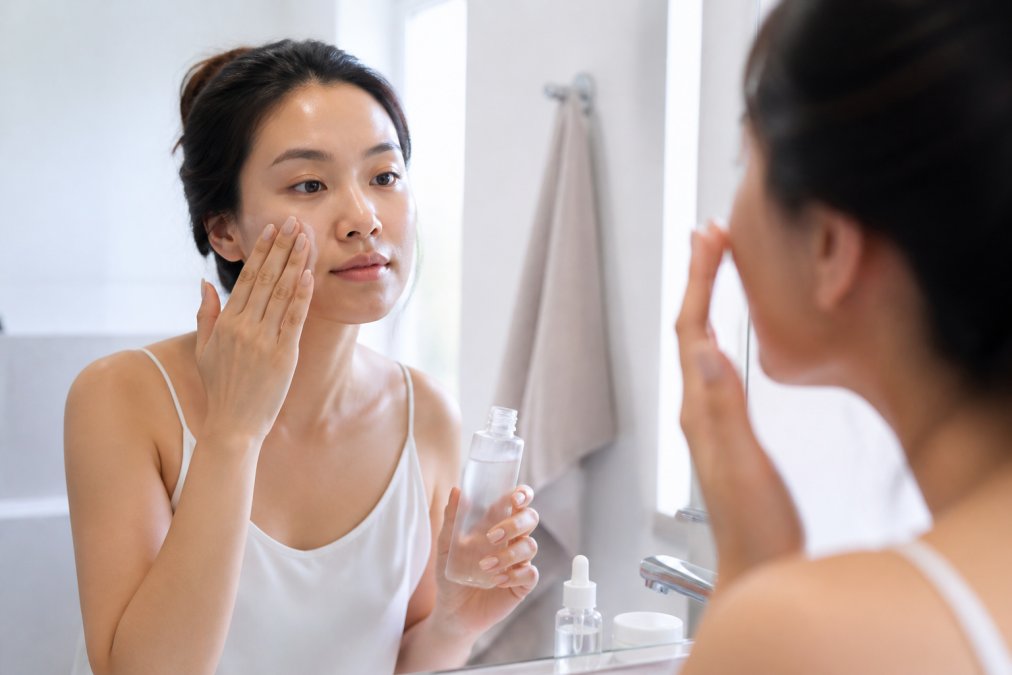
A simple daily framework:
- Morning: rinse with lukewarm water, apply essence, moisturizer, sunscreen
- Evening: gentle cleanser, essence, moisturizer
- Weekly: skip exfoliation entirely during flare-ups
Cleansing Without Stripping Your Skin
Use lukewarm water and a soap-free, pH-balanced cleanser; hot water and foaming formulas strip lipids fast. If you wear makeup, double cleanse gently rather than scrubbing harder. A soft silicone tool like the Sonic Cleansing Beauty Brush can help lift residue.

Moisturizing and Barrier Repair
Apply moisturizer to slightly damp skin to trap water before it evaporates. Look for ceramides, glycerin, and squalane. During a flare, a thicker occlusive at night seals the barrier while it recovers. The Nano Face Mist Hydration Sprayer adds midday hydration without touching your face.

Sun Protection and Lifestyle Triggers Beyond Products
Most sensitive-skin guides stop at the shelf. But many flares are driven by things you never apply to your face: the water you wash with, the detergent on your pillowcase, bedroom humidity, and stress. For many people, this is the part that moves the needle.
Sun Protection for Reactive Skin
Sun protection is non-negotiable for reactive skin. UV exposure worsens redness and inflammation and slows barrier recovery, so a sunburn can undo weeks of rebuilding. Choose a mineral sunscreen with zinc oxide or titanium dioxide, which tends to irritate less than chemical filters, and reapply every two hours outside.
A few practical notes for reactive skin:
- Mineral vs. chemical: Mineral filters sit on top of the skin and are less likely to sting. Chemical filters feel lighter but are more likely to trigger stinging on compromised skin.
- Tinted formulas: Iron oxides in tinted mineral sunscreens help block visible light, which matters if your redness is triggered by heat and light rather than UV alone.
- Reapplication: Powders and sticks reapply over a reactive face without dragging the skin. Creams are fine if you press, not rub.
- Indoor days: If you sit near a window, daily sunscreen still matters. UVA passes through glass.
Environmental Triggers You Probably Have Not Considered
Water hardness. Hard water contains higher levels of calcium and magnesium, which leave residue on skin and disrupt the barrier over time. If your skin feels tight or filmy after washing even with a gentle cleanser, hard water may be part of the problem. A shower filter or a final rinse with filtered water is a low-cost two-week experiment.
Laundry detergent and fabric softener. Your pillowcase touches your face for seven to eight hours a night, and fragranced detergents, dryer sheets, and softeners leave residue that transfers to skin. Switch to a fragrance-free, dye-free detergent and skip the softener, this single change resolves stubborn cheek and jawline irritation for many people.
Indoor humidity. Dry air pulls moisture from skin and accelerates transepidermal water loss. In winter or air-conditioned rooms, a humidifier set between 30 and 50 percent relative humidity supports the barrier while you sleep. Too high risks mold and dust mites, which are their own triggers.
Temperature swings. Hot showers, saunas, and long steamy baths strip lipids and dilate blood vessels, showing up as redness. Lukewarm water and shorter showers are gentler on a reactive barrier.
Stress. Stress raises cortisol and other inflammatory signals, which is why flares cluster around deadlines, travel, or poor sleep. This is physiology, not a personal failing. Sleep, movement, and any stress-reduction practice you will stick with are legitimate skincare tools.
Diet and alcohol. For some people, alcohol and very spicy food trigger flushing. Elimination diets are not a first-line fix, but tracking flares against meals for a few weeks can reveal a pattern worth discussing with a clinician.
The Psychological Side Nobody Talks About
Chronic sensitivity is not just a skin problem. Persistent redness, stinging, and unpredictable reactions can make people avoid mirrors, cancel plans, or feel anxious about trying anything new. That anxiety feeds the cycle: stress worsens flares, flares worsen stress.
A few things help break that loop:
- Stop chasing a cure. Sensitive skin is usually managed, not eliminated. Reframing it as maintenance reduces the pressure to try every new product.
- Keep a short list of known-safe products. Three or four trusted products mean you always have a fallback during a flare.
- Set a rule for new products. One new product every two weeks, patch tested, is slow, and it is the pace that actually works.
- Talk to a dermatologist if flares are frequent. Persistent redness, burning, or reactions that do not resolve may point to rosacea, eczema, or contact dermatitis, which have specific treatments beyond gentle skincare.
Transitioning Your Routine During a Flare-Up
When your skin flares, cut back rather than add. Pause all actives, exfoliants, and new products. Return to a three-step routine: gentle cleanser, barrier moisturizer, sunscreen. Reintroduce one product every five to seven days once your skin has been calm for at least a week.
| Situation | What to Do | What to Avoid |
|---|---|---|
| Mild redness | Simplify to 3 steps | New actives |
| Stinging on contact | Stop the product immediately | "Pushing through" |
| Flaking and tightness | Add occlusive at night | Exfoliating |
| Breakouts plus irritation | Treat irritation first | Acne acids |
A patch test on your jawline before any reintroduction saves you from repeating the cycle.
Rebuilding tolerance in reactive skin takes patience, and the wrong product can set you back weeks. Blush Boutique makes that process simpler with clean, cruelty-free formulas built for real skin, including a 30-day money-back guarantee so you can patch test without risk, fast shipping, and easy support if something does not work for you. Start with one gentle product, give your barrier time to recover, and build from there. Get started with Blush Boutique and find a routine your skin can actually tolerate.
Frequently Asked Questions
What is the best skincare routine for sensitive skin?
Keep it simple: a gentle, soap-free cleanser, a fragrance-free moisturizer with ceramides, and a mineral sunscreen. Introduce one new product at a time and patch test first. Avoid exfoliating more than once a week, and skip alcohol-based toners. A short, consistent routine with gentle skincare products protects your skin barrier better than a long list of active ingredients.
Which ingredients should I avoid in sensitive skincare?
Skip synthetic fragrance, drying alcohols, sulfates, and harsh exfoliants like coarse scrubs. Also watch for essential oils and high concentrations of acids. Look for fragrance-free, hypoallergenic, non-comedogenic, and pH-balanced formulas instead. Ingredients like ceramides, hyaluronic acid, and soothing agents such as colloidal oatmeal help calm reactive skin.
How do I patch test skincare products correctly?
Apply a small amount to your inner forearm or behind your ear. Wait 24 to 48 hours and check for redness, itching, or swelling. If no reaction appears, test on a small area of your face. Stop immediately if you notice irritation. Patch testing helps you identify triggers before committing to a full-size product, especially with gentle skincare for sensitive skin types.
How often should I exfoliate if I have sensitive skin?
Once a week at most, and only with a gentle chemical exfoliant like lactic acid rather than a physical scrub. Over-exfoliating strips your moisture barrier and causes redness, tightness, and irritation. If your skin feels raw or stings, pause exfoliation for two weeks and focus on hydration and barrier repair with ceramides and emollients.