


Is Expensive Skincare Worth the Price? A Data-Driven Answer
Table of Contents
- The Cost of Glow: What Expensive Skincare Really Sets You Back
- What Makes Skincare Expensive: Ingredients vs. Marketing
- Affordable vs Luxury Skincare Ingredients: A Label Comparison
- The Diminishing Returns of High-End Beauty: Cost Per Use
- When Is Expensive Skincare Worth the Price? The Exceptions
- How to Build a Skincare Routine on a Budget That Works
- The Bottom Line: Where to Spend, Where to Save
- Frequently Asked Questions
Last Updated: September 8, 2026
The beauty industry has built a multi-billion-dollar economy on a simple question: is expensive skincare worth the price? The beauty industry has spent years analyzing ingredient labels, formulation science, and real-world results to separate genuine innovation from clever marketing. The short answer is that price rarely equals performance, but that does not mean the expensive jar is always a waste either.
The Cost of Glow: What Expensive Skincare Really Sets You Back
Premium skincare routinely lands between $80 and $300 for a single serum, while a complete, effective routine from thoughtful brands can cost under $50. That price gap stems from a mix of research investment, proprietary technology, and, in many cases, substantial marketing budgets rather than superior ingredients.
A common approach among luxury houses is to price against perception. When a cream costs $200, the brain assumes the formula must be exceptional, but the difference often comes down to fragrance, packaging, and sensory experience, not clinical efficacy.
What Makes Skincare Expensive: Ingredients vs. Marketing
The single largest driver of cost in most high-end products is the marketing markup, not the formula. A significant portion of a luxury product's price covers advertising, celebrity partnerships, and retail placement rather than raw materials.
The Price Tag Breakdown: Where Your Dollar Goes
When you buy a $120 moisturizer, your money splits into marketing and advertising, packaging and design, retail margins, and finally, the actual formulation. Only a modest slice funds the raw ingredients and clinical testing.
Affordable vs Luxury Skincare Ingredients: A Label Comparison
A side-by-side comparison of a $150 serum and a $20 serum often reveals a surprising truth: the first five ingredients, the ones that make up the bulk of the formula, are frequently identical. The divergence typically begins in the supporting cast, where luxury brands add proprietary blends, botanical extracts, and fragrance to justify the premium.
The Clinical Evidence Transparency Test
The most significant gap between luxury and budget isn't always the ingredient itself, but the quality of the evidence behind it. Here is a three-step test you can apply to any product label:
- Identify the Active Ingredient and Its Percentage: Ingredients are typically listed in descending order of concentration, but percentages are not always disclosed. If a product claims to be a potent vitamin C serum but lists ascorbic acid after water, glycerin, and several other ingredients, the concentration is likely too low to be effective. Look for products that explicitly state the percentage on the label or the brand's website.
- Look for the 'Gold Standard' Form: Not all forms of an ingredient are created equal. For vitamin C, L-ascorbic acid is the most studied and potent form, but it is also the most unstable. For retinoids, adapalene is available over-the-counter at a clinically proven 0.1% concentration, while retinol esters like retinyl palmitate are much weaker and require conversion in the skin (the FDA). A luxury product with a weak ingredient form will always underperform a budget product with the right one.
- Demand Third-Party Validation: Be wary of a brand's own 'clinical study' that shows dramatic results. The gold standard is a peer-reviewed, published study or one conducted by an independent lab. When a brand says 'clinically proven,' ask yourself: proven by whom, on how many people, and for how long? A common pattern is for brands to cite internal studies with a small sample size and no control group. A budget product that uses an ingredient with a robust body of independent research is often a safer bet than a luxury product with a proprietary, unverifiable complex.
The 'Dupe' Culture Phenomenon: A Balanced View
The rise of 'dupe culture', where affordable brands create formulas that mimic luxury bestsellers, has fundamentally changed the market. The conversation is no longer just about 'drugstore vs. prestige'; it's about whether a $15 serum can truly replicate a $150 one.
What a dupe can replicate:
- The Primary Active Ingredient: If a luxury serum's key selling point is 10% L-ascorbic acid, a budget brand can easily source and formulate with the same ingredient at the same percentage. The chemistry of the active is not proprietary.
- The Basic Texture and Feel: With modern cosmetic chemistry, creating a similar lightweight gel or rich cream texture is achievable at a lower cost.
What a dupe often cannot replicate:
- The Delivery System: This is the most critical difference. Luxury brands often invest in patented delivery systems, like liposomes, cyclodextrins, or specific encapsulation technologies, that protect the active ingredient from degradation and ensure it penetrates the skin at the right time. A dupe may have the same percentage of vitamin C, but if it degrades on the shelf or sits on the skin's surface, its efficacy is compromised.
- The Supporting Formulation: The 'inactive' ingredients are not inert. They determine the pH, the stability, and the overall skin feel. A cheap formulation might use a high percentage of alcohol to help the product absorb quickly, which can be irritating and damage the skin barrier over time. A luxury formula might use a more sophisticated blend of emollients and humectants that provides a better long-term experience.
The most effective approach is to use the Clinical Evidence Transparency Test on both the luxury product and its dupe. If the dupe can demonstrate a similar concentration of the right ingredient form, a stable formulation, and a reasonable pH, it can be a legitimate, cost-effective alternative.
The Diminishing Returns of High-End Beauty: Cost Per Use
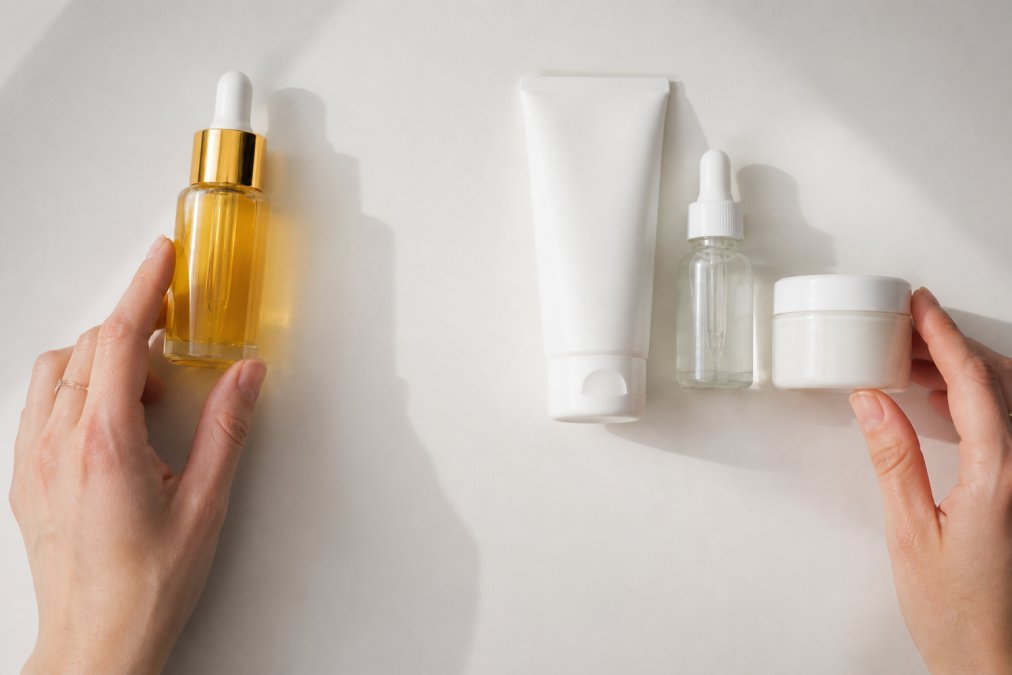
The most honest way to evaluate any skincare purchase is through a cost-per-use analysis: divide the price of the product by the number of uses you get from it.
A Real-World Cost-Per-Use Breakdown
Let's apply this to a few common product categories.
Cleansers: A $25 cleanser with 6.7 fluid ounces typically lasts about three months with twice-daily use. That's roughly 180 uses, putting the cost per use at about 14 cents. A $90 luxury cleanser with the same volume and usage pattern costs 50 cents per use. The difference is $0.36 per wash. Over a year, that's a $262 premium for a product that stays on your skin for less than 60 seconds before being rinsed down the drain.
Moisturizers: A standard 1.7-ounce moisturizer used twice daily will last about two months. A $30 moisturizer costs about 25 cents per use. A $120 luxury moisturizer costs $1.00 per use. The annual cost difference is $540. For a moisturizer, the primary job is to hydrate and support the skin barrier, a function that can be achieved effectively with ceramides, glycerin, and hyaluronic acid, all of which are inexpensive ingredients.

Serums: A 1-ounce serum used once daily (a few drops) can last three to four months. A $20 serum costs about 17 cents per use. A $150 serum costs $1.25 per use. The annual difference is over $390. However, serums are where the premium can sometimes be justified, as they contain the highest concentration of active ingredients and the most sophisticated delivery technology.
The Diminishing Returns Curve in Practice
The relationship between price and efficacy is not linear; it's a curve.
- The $10 to $30 Range: This is where you see the most dramatic jump in quality. Moving from a basic drugstore moisturizer to a mid-range option often delivers a visible improvement in texture, hydration, and skin barrier support. The formulation science is simply better.
- The $30 to $60 Range: This is the 'sweet spot' for many products. You can find well-formulated serums and treatments with clinically proven concentrations of active ingredients. The price-to-value ratio is at its peak here.
- The $60 to $150+ Range: This is where the curve flattens dramatically. The improvements in efficacy become incremental. You are paying for advanced delivery systems, patented technologies, and a more refined sensory experience. The question becomes: is a 5% improvement in efficacy worth a 300% increase in price? For most people, the answer is no.
The Hidden Cost of Inefficacy
There is another dimension to cost-per-use: the cost of a product that doesn't work. If you buy a $100 serum that you abandon after two weeks because it causes irritation or doesn't deliver results, your cost per use is not just the $100 divided by 14 uses, it's the $100 you could have spent on a product that would have worked.
The true cost of skincare is not the price on the label, but the cost per effective use.
When Is Expensive Skincare Worth the Price? The Exceptions
There are legitimate exceptions where spending more makes sense. Targeted treatment products with patented delivery systems, clinically proven concentrations of active ingredients, and published third-party trials can justify a premium.
Stability matters too. Some active ingredients, particularly vitamin C and certain retinoids, require sophisticated formulation technology to remain potent on the shelf. A cheap, unstable formula may degrade before you finish the bottle, making it worthless regardless of price.
How to Build a Skincare Routine on a Budget That Works
Building an effective routine on a budget comes down to prioritizing the products that deliver the most visible results. The essentials are a gentle cleanser, a moisturizer with ceramides or hyaluronic acid, and a sunscreen for daytime.
A Simple, Effective Routine for Under $50
A complete routine can cost less than $50 without sacrificing quality. Start with a cream or gel cleanser suited to your skin type, follow with a hydrating serum containing hyaluronic acid, and finish with a moisturizer that supports the skin barrier. For targeted concerns like dark spots, a turmeric-based serum offers antioxidant potency and brightening benefits without the luxury markup. The FDA guidance on cosmetic labeling requires ingredient lists to be transparent, so you can compare products directly and find affordable options with the same active ingredients as their expensive counterparts.

The Bottom Line: Where to Spend, Where to Save
The honest answer to whether expensive skincare is worth the price is that it depends entirely on the product category. Save on cleansers, moisturizers, and sunscreens, where basic formulation does the heavy lifting. Spend more on leave-on treatments like vitamin C, retinoids, and peptides, where concentration and delivery technology genuinely affect results.
Before any purchase, run a quick calculation: divide the price by the number of expected uses, then check the ingredient list against the active ingredients you actually need. This framework cuts through the noise of dupe culture and luxury hype alike. As dermatological guidance from the American Academy of Dermatology notes, consistency matters more than cost, and the best product is the one you will actually use daily.
If you are looking for clean, cruelty-free products that deliver results without the luxury markup, consider starting with the Radiant Glow Essence with Hyaluronic Acid at $19.95, which pairs well with a simple moisturizer and sunscreen for a full routine under $50. For targeted dark spot concerns, the Turmeric Radiance Serum offers a natural, eco-friendly option at the same price point. Blush Boutique's formulas are designed for real skin and busy mornings, with a 30-day money-back guarantee so you can test the routine risk-free.
| Product Focus | Where to Spend | Where to Save | Key Consideration |
|---|---|---|---|
| Cleansers | Mid-range | Drugstore | Rinse-off products have limited skin contact time |
| Moisturizers | Mid-range | Drugstore | Ceramides and hyaluronic acid are affordable ingredients |
| Serums (Vitamin C, Retinoids) | Premium | Budget | Concentration and stability drive clinical efficacy |
| Sunscreen | Premium | Budget | SPF rating matters more than brand name |
| Exfoliants | Mid-range | Budget | Chemical exfoliants are inexpensive to formulate |
The skincare market rewards informed shoppers. By focusing on ingredient concentration, clinical evidence, and cost per use, you can build a routine that performs at any price point.
Frequently Asked Questions
Does expensive skincare really make a difference compared to drugstore brands?
Sometimes, but not always. The difference comes down to active ingredient concentration, formulation technology, and clinical testing. A $30 serum with 10% vitamin C is more effective than a $100 one with a tiny amount. Check the label for where the active ingredients appear in the ingredient list and whether the brand publishes clinical trial results. Often, affordable brands with transparent formulas perform just as well as luxury options.
What ingredients justify a higher price point in skincare?
Ingredients that are unstable or hard to formulate justify a higher cost. Look for stabilized vitamin C (like ascorbic acid derivatives), encapsulated retinol, and specific hyaluronic acid molecular weights. These require proprietary technology to remain effective on the shelf. The price reflects the delivery system that keeps the active ingredient stable and able to penetrate the skin, not just the raw ingredient itself.
What is the 4-2-4 rule in skincare?
The 4-2-4 rule is a method for testing new products, especially if you have sensitive skin. Apply a new product for 4 days to check for any immediate reaction. If all is well, continue using it for 2 weeks to see how your skin adjusts. After 4 weeks, you should be able to judge the product's full effect. This helps you avoid wasting money on products you haven't given a fair trial.
Is it worth it to spend money on skincare versus professional treatments?
For daily maintenance, a good skincare routine is essential and often more cost-effective than frequent professional treatments. However, for targeted concerns like deep acne scars or severe hyperpigmentation, professional treatments deliver faster results. A budget-friendly routine with proven active ingredients like retinol and vitamin C can maintain those professional results between visits. Start with a solid routine and treat professional procedures as occasional boosts.