


Why Switch to Cruelty-Free Skincare: A 2026 Guide
Table of Contents
- What Cruelty-Free Skincare Actually Means (And What It Doesn't)
- How to Identify Cruelty-Free Brands Without Getting Fooled
- Cruelty-Free vs Vegan Skincare Differences: Why They're Not the Same
- Is Cruelty-Free Skincare Safer for Sensitive Skin?
- The Real Cost of Switching: Is Cruelty-Free Skincare Worth It?
- How to Make the Switch Without Overhauling Your Routine
- Frequently Asked Questions
Last Updated: September 13, 2026
What Cruelty-Free Skincare Actually Means (And What It Doesn't)
Cruelty-free skincare is skincare not tested on animals at any stage of development, and whose finished products aren't sold in markets that require animal testing by law. That last clause is why a product can carry a bunny logo and still have a complicated story.
Cruelty-free means no animal testing was performed on the formula or its individual ingredients by the brand or its suppliers. It does not mean the product is vegan, natural, or automatically gentler on your skin, three separate claims, and conflating them is a common mistake.
The Leaping Bunny Standard and Other Certifications
The Leaping Bunny Program, run by the Coalition for Consumer Information on Cosmetics, is the most cited gold standard because it requires no animal testing at any point in the supply chain, independent audits, and written commitments from ingredient suppliers. That supply-chain audit separates it from a self-declared claim.
Other logos exist, including PETA's Beauty Without Bunnies and regional marks, but verification depth varies. A brand can print a bunny on a bottle without anyone checking; certification bodies that audit suppliers carry more weight than a brand's own statement.
How to Identify Cruelty-Free Brands Without Getting Fooled
The most reliable way to identify a cruelty-free brand is verifying the claim through a third-party database rather than the packaging alone. A logo is a starting point, not proof, and what the claim actually covers is narrower than most shoppers assume.
Here's a practical sequence to run before you buy:
- Search the brand on a certification database. Leaping Bunny and PETA publish searchable lists of companies meeting their criteria. If the brand isn't listed, that's not proof it tests on animals, it may simply not have paid for certification, but the claim is self-declared.
- Check the ingredient-level claims. A brand may not test finished products but still buy ingredients from suppliers who do. Certification programs that audit the supply chain, like Leaping Bunny, address this. A bunny logo with no audit behind it does not.
- Read the "sold in testing markets" question carefully. A brand can be genuinely cruelty-free in its own operations and still sell where animal testing on imported cosmetics is required. Whether that counts is a judgment call, make it knowingly.
- Look for a stated policy, not just a badge. Brands with real commitments publish their testing policy, name their suppliers' verification process, and update it when it changes. A static "we love animals" paragraph is not a policy.
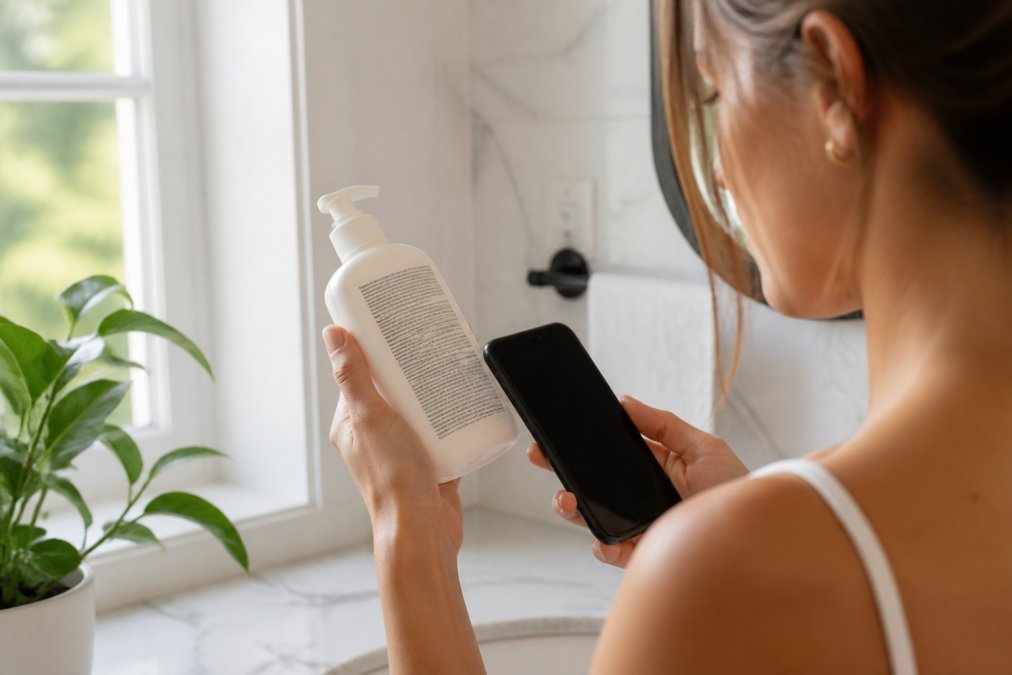
- Cross-check with your phone in the aisle. Five minutes of searching beats a year of wondering.
The Regulatory Landscape: Why the Same Product Can Be Cruelty-Free Here and Not There
This part determines whether a brand's claim is even possible.
In the United States, there is no federal ban on animal testing for cosmetics (the FDA). The FDA doesn't require it, doesn't prohibit it, and doesn't define what a cruelty-free label means. A U.S. brand can test on animals and sell nationwide with no legal consequence, or claim cruelty-free with no verification, because there's no federal standard for the term.
A handful of states have moved further. California prohibits the sale of cosmetics tested on animals after a certain date, with limited exceptions, and other states have introduced similar bills (leginfo.legislature.ca.gov). The result is a patchwork: a product legal in one state may not be legal in another, and a national claim may not reflect every market.
Outside the U.S., the picture is more restrictive. The European Union bans animal testing for cosmetics and, separately, the sale of cosmetics tested on animals, stronger than a testing ban alone (europa.eu). That sale ban is why some brands reformulated or exited the EU market.
The takeaway: cruelty-free status isn't a single fact but a set of facts about where a brand tests, where it sells, and what its suppliers do. Certification databases check the first two; the third requires reading the brand's policy.
The Parent Company Gray Area
A small cruelty-free brand can be owned by a parent company that also owns brands which test on animals, or sell in markets requiring it.
The brand itself may not test; the parent might. Whether that matters is a personal call, but know the ownership structure before you decide, the bunny logo tells you nothing about who cashes the check.
If this matters to you, look up the brand's parent company before committing to a full routine. It takes two minutes.
Cruelty-Free vs Vegan Skincare Differences: Why They're Not the Same
Cruelty-free refers to testing practices; vegan refers to ingredients. A product can be cruelty-free but contain beeswax, honey, lanolin, or carmine. A product can be vegan but still tested on animals in development.
| Claim | What It Covers | What It Doesn't Cover |
|---|---|---|
| Cruelty-free | No animal testing | Animal-derived ingredients |
| Vegan | No animal-derived ingredients | Testing practices |
| Clean | Ingredient restrictions | Testing or sourcing ethics |
| Natural | Sourcing origin | Safety or ethics |
Most shoppers assume these labels move together. They don't. If both matter to you, look for products with both certifications and read the ingredient list for carmine, lanolin, and beeswax.
Cruelty-free is about testing. Vegan is about ingredients. A product can be one, both, or neither, and the label on the front rarely tells you which.
Is Cruelty-Free Skincare Safer for Sensitive Skin?
Cruelty-free skincare is not automatically safer for sensitive skin, and marketing here does real damage. Testing status has nothing to do with how a formula behaves on reactive skin.
What matters for sensitivity is the ingredient profile: fragrance load, preservative type, exfoliant strength, and irritation assessment. A cruelty-free product can still contain a fragrance blend that sets your face on fire; a product tested on animals can still be gentle.
That said, brands investing in certification and supply-chain transparency tend to also invest in non-animal formulation testing, in-vitro models and human patch testing.
For sensitive skin, the practical approach is:
- Patch test on your inner forearm for 48 hours before applying to your face
- Introduce one new product at a time, not a full routine swap
- Look for fragrance-free formulas and short ingredient lists
- Keep a simple log of what you used and when reactions appeared
A gentle, plant-derived formula like a turmeric-based serum or a hyaluronic acid essence can suit reactive skin well, but the patch test is what tells you, not the label.

The Real Cost of Switching: Is Cruelty-Free Skincare Worth It?
The most persistent myth in ethical beauty is that cruelty-free always costs more. Sometimes it does, often it doesn't, and the difference is smaller than the marketing on either side suggests.
Here's where the money actually goes when a brand carries a certification:
- Certification fees. Leaping Bunny and PETA's Beauty Without Bunnies charge brands to be listed and maintain status, modest per year, but real overhead for a small company.
- Supplier audits. Real certification requires written commitments from every ingredient supplier, administrative labor, not a one-time cost.
- Lost volume. Mass-market manufacturers spread fixed costs across millions of units; an indie brand producing 10,000 units pays more per unit for the same packaging, preservatives, and lab time.
- Non-animal testing. In-vitro assays, reconstructed human skin models, and human patch testing all cost money. They replace animal tests, not the testing budget.
None of that means the finished product has to be expensive. The cruelty-free premium is concentrated at the low end, where a drugstore brand can undercut an indie label by a dollar or two, and largely disappears at the mid and high end, where conventional brands already charge luxury prices for formulas that aren't meaningfully better.
Where cruelty-free is genuinely cheaper:
- Single-ingredient staples. Rosehip seed oil, shea butter, castile soap, commodity products where the ethical and conventional versions often come from the same suppliers at the same price.
- Refill and concentrate formats. A concentrated serum you dilute yourself or a refill pouch cuts packaging cost. Several cruelty-free brands built their whole model around this.
- Fewer products. A ten-step routine at $18 per product runs about $180; a four-step routine at $24 per product runs about $96. The per-item premium is real, but routine-size savings are larger.
Where cruelty-free is genuinely more expensive:
- Prestige skincare. A $90 cruelty-free serum and a $90 conventional serum cost the same, but the cruelty-free brand may have less margin for advertising, meaning less discounting and fewer sales.
- Specialty actives. Retinol, vitamin C, and peptide formulas require stability testing. Brands refusing animal testing sometimes pay more for alternative stability models, and that cost can show up in the price.
- Small-batch color cosmetics. Pigment sourcing is the hardest part of the supply chain to verify. A cruelty-free lipstick from a small brand can cost meaningfully more than a mass-market equivalent.
To test the myth yourself: pick three products you already buy, find a cruelty-free equivalent at a similar size, and compare per-ounce price rather than sticker price. A 1 oz serum at $22 and a 1.7 oz serum at $28 aren't the same product at different prices, one is roughly $22 per ounce, the other $16.50. Unit price is the only honest comparison.
Don't assume a higher price means better formulation, or a lower price means the certification is fake. Certification and marketing both add cost; the ingredient list and unit price tell you what you're actually buying.
If budget decides, the cheapest ethical swap is the one you already own, finish the bottle, then replace it with a certified option when it runs out. That spreads the premium across months.
How to Make the Switch Without Overhauling Your Routine
You don't need to throw out everything on your shelf. Replace products as they run out, one at a time, so you can tell what's working.
Start with the products that sit on your skin longest: cleanser, serum, moisturizer. A gentle cleanser is the easiest first swap, low-risk, and you'll know within a week whether your skin tolerates it. Then move to treatment, moisturizer, and makeup.
A simple four-step starter routine:
- Cleanse: A gentle, non-stripping cleanser, morning and night
- Treat: One targeted serum for your main concern, applied to damp skin
- Hydrate: A moisturizer or essence to seal in water
- Protect: Sunscreen every morning, no exceptions
That's it: four products, five minutes. If you want a starting point, our Turmeric Radiance Serum at $19.95 targets uneven tone without harsh actives, and the Radiant Glow Essence with Hyaluronic Acid at $19.95 layers under moisturizer for hydration. Both are formulated for daily use.

Switching to cruelty-free skincare shouldn't mean gambling on formulas that might irritate your skin or underperform what you already own. Blush Boutique stocks clean, cruelty-free essentials built for real routines: gentle formulas safe for daily use, simple products designed for busy mornings, and a 30-day money-back guarantee so trying something new carries no risk. Rated 4.9/5 by more than 5,000 customers, with fast shipping and easy support when you have questions. Get started with Blush Boutique and build a routine you actually look forward to using.
Frequently Asked Questions
What does cruelty-free mean in skincare?
Cruelty-free means no animals were tested on at any stage of making the product, including ingredients and the finished formula. It does not automatically mean the product is vegan, since a cruelty-free serum can still contain beeswax or lanolin. Look for third-party certifications like Leaping Bunny, which require a brand to verify its entire supply chain rather than just making a self-declared claim on the label.
Is cruelty-free skincare safer for sensitive skin?
Not automatically. Cruelty-free describes how a product was tested, not what is in it. A formula can skip animal testing and still contain synthetic dyes, sulfates, or parabens that trigger reactions. For sensitive skin, check the ingredient list for plant-derived ingredients. Patch-test any new product on your inner arm for 24 hours before applying it to your face.
How can I tell if a skincare brand is truly cruelty-free?
Check for a recognized certification logo such as Leaping Bunny or PETA's Beauty Without Bunnies program, then verify it on the certifying organization's own website rather than trusting the label alone. Read the brand's animal testing policy for language about suppliers and ingredient sourcing, not just finished product testing. If a brand is vague about its parent company or refuses to name its suppliers, treat the claim as unverified.
Are cruelty-free products more expensive?
Prices vary widely. Some cruelty-free brands cost more because third-party certification, supply chain transparency, and smaller production runs add overhead. Others stay affordable by skipping certification and self-declaring. At Blush Boutique, for example, the Turmeric Radiance Serum is $19.95 and the Radiant Glow Essence with Hyaluronic Acid is $19.95, which sits in the same range as many conventional drugstore serums.