


Best Credo Beauty Alternatives 2026: Clean Picks That Perform
Table of Contents
- What Makes a Clean Beauty Brand Worth Switching To in 2026
- The Criteria That Actually Matter
- Best Clean Beauty Brands for Beginners: Start Simple, Not Overwhelmed
- Clean Beauty Ingredient Standards Guide: How to Read a Label Without a Chemistry Degree
- How to Transition to a Clean Beauty Routine Without Wasting Money
- Blush Boutique vs. Credo Beauty: Where the Real Difference Shows
- Ingredient Transparency vs. Greenwashing: How to Tell the Difference
- Performance-Based Comparisons: Do Clean Formulas Actually Work?
- Frequently Asked Questions
Last Updated: September 12, 2026
What Makes a Clean Beauty Brand Worth Switching To in 2026
Clean beauty means formulating cosmetics and skincare without ingredients linked to irritation or health concerns, and making that ingredient list transparent. The best alternatives shoppers find share three traits: a published full ingredient list, third-party certification, and formulas that perform.
The category has a credibility problem: a brand can print "natural" on a label with almost no oversight, which is why transparency matters more than any marketing claim (the FDA).
The Criteria That Actually Matter
Four criteria separate a brand worth switching to from one riding a trend.
- Full ingredient disclosure: every ingredient listed, not just the "hero" botanicals
- Third-party certification: independent verification of cruelty-free and vegan claims
- Synthetic fragrance-free formulas: fragrance is a common trigger for sensitive skin
- Dermatologist-tested or hypoallergenic positioning: tested on real skin, not just marketed to it
Price alone tells you nothing. A higher price reflects formulation cost, certification fees, and smaller batch production, not automatically better ingredients.
Best Clean Beauty Brands for Beginners: Start Simple, Not Overwhelmed
A beginner routine needs three products, not twelve. Most people quit a clean beauty transition because they buy too much at once and can't tell what's working.
Three Products That Cover 80% of a Starter Routine
- A gentle cleanser that removes makeup without stripping the skin barrier
- A hydrating serum to support moisture retention
- A mineral-based makeup item, such as a blush or highlighter, for everyday color
Blush Boutique built its catalog around this idea: the Radiant Glow Essence with Hyaluronic Acid at $19.95 handles hydration, and the Turmeric Radiance Serum at $19.95 targets uneven tone and dark spots.


Clean Beauty Ingredient Standards Guide: How to Read a Label Without a Chemistry Degree
Reading a label comes down to knowing what you're looking at, not memorizing a banned-ingredient list. Most shoppers scan for parabens, sulfates, synthetic fragrance, and undisclosed "fragrance" catch-alls, but that scan won't tell you whether a formula is well-built. The deeper skill is reading the order, the preservative system, and the certification language.
Ingredients are ordered by concentration, so the first five tell you most of the story. A serum that lists water first and its active botanical last is mostly water; one that lists its active in the first three positions is making a real formulation claim.
The Four Label Zones That Actually Matter
1. The first five ingredients. These are the base, water, oils, humectants, emulsifiers. If a brand leads with a botanical extract and buries water at position four, the "hero" ingredient is likely present at a fraction of a percent.
2. The preservative system. Every water-based formula needs preservation, and "preservative-free" on a water-based serum is a red flag. Common clean-compatible systems include phenoxyethanol, sodium benzoate, potassium sorbate, and caprylhydroxamic acid, none of which are the parabens shoppers were taught to avoid.
3. The fragrance line. "Fragrance" or "parfum" as a single line item can legally hide dozens of undeclared compounds. "Fragrance (phthalate-free)" narrows it; "fragrance (from natural essential oils: lavender, bergamot)" is the most transparent version. If a brand markets itself as fragrance-free but lists "natural fragrance," that's a greenwashing tell.
4. The certification block. Look for named third-party bodies, not self-declared claims. Common ones shoppers will recognize: Leaping Bunny (cruelty-free), Certified Vegan, USDA Organic, and EWG Verified. A brand that prints "cruelty-free" with no certifying body behind it is making an unverified claim.
Red Flags vs. Real Concerns
Not every long chemical name is dangerous. Some are simply the scientific name for a plant extract, sodium hyaluronate is a hyaluronic acid salt, tocopherol is vitamin E, panthenol is a provitamin B5. The real red flags are vagueness and missing certifications, not syllable count.
Names worth pausing on:
- Parabens (methyl-, propyl-, butyl-): linked to endocrine concerns in some research; widely avoided in clean formulas.
- Phthalates (often hidden inside "fragrance"): used as fragrance fixatives; the reason full fragrance disclosure matters.
- Sodium lauryl sulfate (SLS): a strong surfactant that can strip the skin barrier; sodium cocoyl isethionate and coco-glucoside are gentler alternatives.
- Formaldehyde releasers (DMDM hydantoin, diazolidinyl urea): preservatives that slowly release formaldehyde; commonly flagged in clean standards.
- PEG compounds: not inherently unsafe, but their manufacturing can leave trace contaminants; some clean standards restrict them, others don't.
A Five-Minute Vetting Routine
When you land on a brand's product page, run this sequence:
- Scroll to the full INCI list. If it's not published, close the tab.
- Check the first five ingredients against the product's marketing claims.
- Look for a named preservative system on any water-based formula.
- Search the page for "fragrance" and see how it's disclosed.
- Look for a named third-party certification, not a self-declared badge.
A brand that fails step one or five is relying on the word "clean" to do work the formula can't.
How to Transition to a Clean Beauty Routine Without Wasting Money
Replace one product at a time, and finish what you already own first. Swapping an entire shelf at once wastes money and confuses your skin about what caused a reaction.
A practical order:
- Finish your current cleanser before buying a clean replacement
- Introduce one new product every two weeks
- Track how your skin responds for the first 14 days
- Keep a backup of anything that works before trying the next swap
A slow transition costs less and reveals sensitivities faster: if a product irritates your skin, you'll know exactly which one caused it.
Blush Boutique vs. Credo Beauty: Where the Real Difference Shows
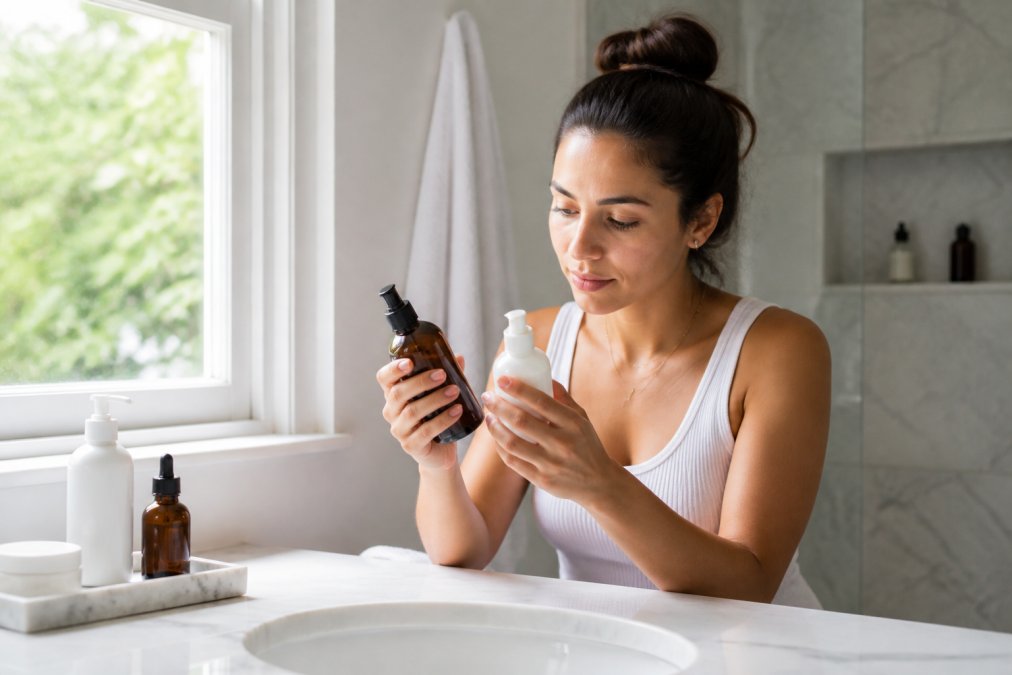
The difference comes down to curation and price transparency, not prestige. Blush Boutique offers a smaller, tightly curated catalog of clean, cruelty-free essentials with published prices and a 30-day money-back guarantee.
Pricing and What You're Actually Paying For
Here's how Blush Boutique's core skincare and tool lineup breaks down:
| Product | Price | Best For |
|---|---|---|
| Radiant Glow Essence with Hyaluronic Acid | $19.95 | Daily hydration, all skin types |
| Turmeric Radiance Serum | $19.95 | Dark spots, uneven tone |
| Turmeric Vitamin C Face Mask | $22.95 | Weekly brightening, pore clearing |
| Glow Skin Turmeric Scrub | $27.95 | Body exfoliation, rough patches |
| Sonic Cleansing Beauty Brush | $41.95 | Deep cleansing, sensitive skin |
| KSKIN Ionic Facial Steamer | $86.95 | At-home facial prep |
You're paying for clean formulation, cruelty-free verification, and fast shipping, not a department-store markup.
Ingredient Transparency vs. Greenwashing: How to Tell the Difference
Greenwashing is when a brand uses vague eco-friendly language to imply clean standards it doesn't meet. The tell is almost always a missing ingredient list or a certification claim with no third party behind it.
Ask three questions of any brand:
- Is the full ingredient list published, or only the highlights?
- Is the cruelty-free claim certified by an independent body?
- Does the packaging claim match what the brand actually does?
A brand that answers all three clearly is usually the real thing; one that dodges the second question usually isn't.
Performance-Based Comparisons: Do Clean Formulas Actually Work?
Most competitor articles stop at "clean formulas have improved." That's not useful if you're deciding whether to spend $20 on a clean serum or $12 on a conventional one. This section breaks performance down by category, using criteria a wear test would actually measure.
How to Run Your Own Wear Test
Before trusting any brand's performance claim, run a two-week side-by-side on the category you care about most:
- Apply the clean formula to one side of your face and your current conventional product to the other.
- Photograph both sides at application, at the four-hour mark, and at the end of the day.
- Score four things: coverage or color payoff, wear time before fading, how your skin feels at hour eight, and any irritation by day seven.
- Repeat for three days before drawing a conclusion. One bad day is usually skin condition, not the formula.
This is the test almost no listicle runs, and the only one that tells you whether a swap is worth the price difference.
Category-by-Category: Where Clean Wins and Where It Doesn't
Skincare (serums, essences, moisturizers): Clean formulas match conventional ones closely here. The actives, hyaluronic acid, niacinamide, vitamin C derivatives, turmeric extract, are the same molecules regardless of brand positioning. Performance differences come down to concentration and delivery system, not whether the brand calls itself clean.

Cleansers: Clean wins on skin-barrier friendliness. Conventional foaming cleansers often rely on SLS or SLES for lather, which can strip the barrier over time. Clean alternatives using coco-glucoside or sodium cocoyl isethionate clean effectively with less disruption. The trade-off is lather, clean cleansers foam less, which some users read as "not working." It is working.
Blush, highlighter, bronzer: Clean mineral formulas now match conventional ones on pigment payoff and blendability for everyday wear. Mineral pigments (iron oxides, mica, titanium dioxide) are the same colorants used in conventional makeup; the difference is binder and emollient systems, which have improved substantially in the last five years.
Foundation and full-coverage concealer: Conventional formulas still hold an edge here. Full-coverage, 12-to-14-hour wear typically relies on silicone-heavy film formers and higher pigment concentrations in volatile solvents. Clean formulators can approximate this, but wear time is usually shorter, often six to ten hours before noticeable fading on oily skin.
Mascara: Clean mascaras have improved on flaking and smudging but still generally underperform conventional waterproof formulas on humidity resistance. For daily wear in dry conditions they're competitive; for a wedding, a workout, or a rainy commute, conventional waterproof still wins.
What Still Varies, and Why
Three formulation realities explain most of the remaining performance gap:
- Preservative systems. Clean formulas often use milder preservation, which can shorten real-world shelf life after opening. Check the period-after-opening symbol (the open-jar icon with a number of months) and respect it.
- Silicone alternatives. Conventional formulas use dimethicone and similar silicones for slip and long wear. Clean formulators substitute plant-derived emollients, which feel different on the skin and often wear shorter.
- Pigment loading. Clean foundations sometimes cap pigment concentration to keep texture spreadable without silicone, which shows up as lighter coverage.
The Bottom Line on Performance
For skincare, cleansers, and everyday color cosmetics, clean formulas perform at parity with conventional ones when the actives and pigments are well chosen. For long-wear full-coverage foundation and waterproof mascara, conventional formulas still lead on durability. The honest answer to "do clean formulas work" is: it depends on the category, and any brand claiming otherwise across the board is selling a story, not a formula.
Frequently Asked Questions
Is Credo Beauty a good brand to compare against?
The key is knowing which criteria matter most for your skin and budget before you commit to any retailer. If you want a smaller, more curated selection with lower prices and faster shipping, Blush Boutique offers a different trade-off.
What makes a beauty brand truly 'clean' in 2026?
There's no single legal definition of 'clean beauty' in the US, which is exactly why greenwashing is so common. A genuinely clean brand will disclose full ingredient lists, avoid parabens, sulfates, and synthetic fragrances, and back up claims with third-party certification or dermatologist testing. Look for specific ingredient sourcing information, not just marketing language. If a brand can't tell you what's in the formula and why, that's your answer.
How do I verify the ingredient standards of new clean beauty brands?
Start with the full ingredient list, not the front label. Check whether the brand publishes a complete INCI list and whether it explains what each ingredient does. Look for third-party certifications like Leaping Bunny for cruelty-free claims or USDA Organic for botanical ingredients. Cross-reference any 'free-from' claims against the actual label. Brands that publish sourcing details and toxicology screening results are more trustworthy than those relying on vague terms like 'natural' or 'pure.'
Are there affordable alternatives to high-end clean beauty retailers?
Yes. Blush Boutique offers clean, cruelty-free products starting at $19.95, including the Radiant Glow Essence with Hyaluronic Acid and the Turmeric Radiance Serum. Both are formulated for sensitive skin and avoid common irritants. The price difference comes from a smaller, more focused catalog rather than compromising on ingredient standards. You get transparent formulas and a 30-day money-back guarantee without the premium retail markup.
How do I transition to a clean beauty routine without wasting money on products I won't use?
Replace one product at a time, starting with whatever touches your skin longest, like cleanser or moisturizer. Don't overhaul everything at once. Use the Blush Boutique starter approach: a gentle cleanser, a hydrating essence like the Radiant Glow Essence, and one treatment serum. Finish each product before buying the next. This lets you test how your skin responds and avoids a cabinet full of half-used bottles you regret.