


Clean Beauty Ratings: How to Read Them
Table of Contents
- What Clean Beauty Ratings Actually Measure
- Understanding the EWG Skin Deep Database
- How to Read Skincare Labels and Ingredient Lists
- Clean Beauty Certification Standards Explained
- Evaluating Clean Beauty Products Beyond Ratings
- Blush Boutique's Approach to Clean Beauty Standards
- Making the Switch to Rated Clean Products
- Frequently Asked Questions
Last Updated: October 8, 2026
What Clean Beauty Ratings Actually Measure
Clean beauty ratings attempt to quantify the safety and transparency of personal care products, but they measure different things depending on which system you're using. Some focus on ingredient hazards. Others assess environmental impact. A few evaluate brand transparency practices. Understanding what a rating actually measures is the first step to using it correctly, and not over-trusting a single score.
At Blush Boutique, we've noticed that customers often treat ratings like a seal of approval, when really they're more like a diagnostic tool. A high rating doesn't automatically mean a product is safe for your skin. A low rating doesn't mean it will harm you. What ratings do is flag potential concerns and help you make informed decisions based on what matters to you.
The most common clean beauty rating systems evaluate ingredients against toxicology databases, regulatory status, and scientific literature. They ask: Does this ingredient appear on any hazard lists? Has it been restricted or banned in certain markets? What does the research say about its safety profile?
But here's what most guides miss: ratings don't account for concentration. A product might contain a flagged ingredient at 0.001%, which is cosmetically inert, or at 5%, which could matter more. Ratings also don't always distinguish between hazards that apply to workers in manufacturing versus hazards to consumers using the finished product. And they can't predict how your individual skin will react, that's biology, not chemistry.
Understanding the EWG Skin Deep Database
The EWG Skin Deep Database is the most widely referenced clean beauty rating system in the United States. It assigns products a hazard score from 1 (lowest hazard) to 10 (highest hazard) based on ingredient analysis. The database includes over 700,000 products and is freely searchable, which is why you'll see it cited constantly in clean beauty conversations.
EWG's methodology relies on published scientific literature, regulatory lists (like those from the FDA and European Union), and occupational exposure data. When an ingredient appears on a hazard list, whether it's flagged for reproductive concerns, organ toxicity, or allergenic potential, EWG assigns it a hazard score. The product's overall score is determined by the highest-scoring ingredient it contains, weighted by concentration when that data is available.
The strength of EWG Skin Deep is transparency. You can see exactly which ingredients triggered which concerns and read the source citations. This makes it useful for people who want to understand why a product got a particular rating.
Another limitation: EWG updates the database continuously, but product formulations change frequently. A product you looked up six months ago might have reformulated, and the database entry might not reflect that. Always verify the product you're actually buying matches the one in the database.
How to Read Skincare Labels and Ingredient Lists
Reading an ingredient list requires knowing two things: the order ingredients appear in, and what concentrations mean for safety assessment. Ingredients are listed in descending order by weight, so the first few ingredients make up the bulk of the product. Water is almost always listed first in skincare because most formulas are water-based.
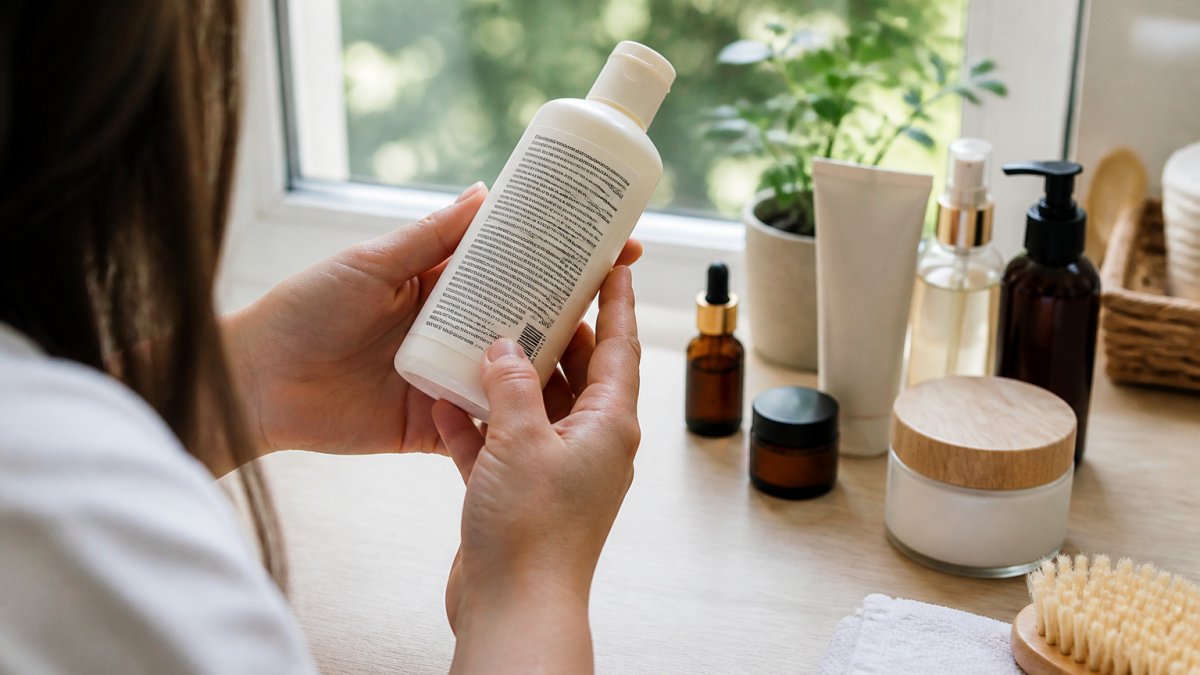
When you see an ingredient listed near the end of the label, it's present in very small amounts, often less than 1%. This matters because hazard assessments sometimes flag ingredients without considering whether the concentration is meaningful.
Look for the ingredient name you recognize, then count its position. The closer to the top, the higher the concentration. If an ingredient you're concerned about appears at position 15 or later, the product contains a minimal amount. If it's in the top five, it's a primary component and warrants closer scrutiny.
Skincare labels in the United States must list ingredients in descending order of concentration, but they don't have to list exact percentages (the FDA). This is why you can't always calculate precisely how much of something is in a product.
Many brands now include ingredient breakdowns on their websites or packaging to add transparency beyond what regulations require.
Clean Beauty Certification Standards Explained
Certification standards differ significantly, which means a product certified by one organization might not meet another's criteria. Understanding which standards actually matter requires knowing what each one tests for and who backs it.
Common certifications include Leaping Bunny (cruelty-free), USDA Organic (ingredient sourcing), EWG Verified (ingredient hazard assessment), and Cradle to Cradle (environmental responsibility). Some brands pursue multiple certifications; others choose one that aligns with their values. Each certification has a fee, so not all clean brands carry them, some meet the criteria but choose not to certify.
Cruelty-free certifications verify that a product and its ingredients weren't tested on animals. USDA Organic certifies that ingredients meet federal organic standards, which includes restrictions on synthetic pesticides and fertilizers. EWG Verified means the product passed EWG's hazard assessment and meets their transparency requirements.
The catch: certification doesn't mean a product is better than an uncertified one. An excellent clean product might skip certification because the cost doesn't justify it for a small brand. A certified product might be certified for only one attribute (like cruelty-free) while containing ingredients some consumers would prefer to avoid.
When evaluating certifications, ask what they actually guarantee. Cruelty-free means no animal testing, it doesn't say anything about ingredient safety. Organic means the plant ingredients followed organic farming standards, it doesn't guarantee the finished product is safer than a non-organic alternative. Knowing what each seal means prevents you from over-interpreting what it promises.
Evaluating Clean Beauty Products Beyond Ratings
Ratings are a starting point, not a finish line. The most informed purchasing decision combines a rating with other factors: your skin type, any sensitivities you know about, the product's actual ingredients versus its marketing claims, and whether the brand's values align with yours.
Start by identifying your skin concerns. If you have sensitive skin, look for products with shorter ingredient lists and fewer known irritants, not necessarily products with the lowest EWG score, because some high-scoring products are flagged for hazards unrelated to skin irritation.
Next, compare what a product claims to what it actually contains. "Hypoallergenic" isn't regulated, any brand can use it. "Natural" can mean almost anything. "Dermatologist-tested" usually just means a dermatologist looked at it, not that clinical trials proved safety. These marketing claims often oversell what the formula delivers. Read the actual ingredients instead.
Test products on a small area first if you have a history of reactions. A product with a perfect rating can still trigger an individual sensitivity; skin chemistry is individual, and ratings can't predict that.
Consider the brand's transparency practices. Do they publish their full ingredient sourcing? Do they explain why they chose specific ingredients? Do they acknowledge limitations and tradeoffs in their formulas? Brands that are open about their process tend to be more trustworthy than those that rely entirely on marketing language.
Blush Boutique's Approach to Clean Beauty Standards
Our curated selection of clean, cruelty-free products reflects our commitment to transparency and real-world performance. We evaluate products using multiple criteria: ingredient safety assessment, brand transparency practices, cruelty-free status, and actual customer feedback on how formulas perform on different skin types.
We don't just chase ratings. Instead, we ask: Does this product deliver what it promises? Will it work for busy professionals who want effective skincare without complexity? Does the brand stand behind their claims with evidence? Our turmeric-based products, like the Turmeric Radiance Serum ($19.95) and Glow Skin Turmeric Scrub ($27.95), combine traditional ingredients with modern formulation.


Our Radiant Glow Essence with Hyaluronic Acid ($19.95) demonstrates this philosophy: it's a deep-hydrating formula designed for daily use, suitable for all skin types, and formulated without unnecessary additives. The Turmeric Vitamin C Face Mask ($22.95) shows how clean beauty can deliver visible results, it exfoliates and brightens without harsh chemicals, making it accessible for people new to targeted skincare.

We back every product with a 30-day money-back guarantee because we know ratings don't predict individual results. If a product doesn't work for your skin, return it. That's how we've built trust with over 5,000 customers who've rated us 4.9 out of 5 stars.
Making the Switch to Rated Clean Products
Transitioning to clean beauty products doesn't require throwing out everything you own and starting fresh. A gradual approach reduces the risk of overwhelming your skin and helps you identify which products genuinely work for you.
Start with one category. If skincare is your priority, begin there. Replace one product at a time, perhaps your cleanser first, then your moisturizer a week later.
Choose products rated well in categories that matter to you. If ingredient hazards concern you most, prioritize products with low EWG scores. If environmental impact drives your choices, look for certifications like Cradle to Cradle or brands that use sustainable sourcing.
Expect a transition period. Some people's skin adjusts within days; others take 4-6 weeks. If you're switching from highly fragranced products to unscented clean formulas, your skin might feel different initially, less "tingly" or "fresh," but often healthier long-term.
| Step | Timeline | What to Expect |
|---|---|---|
| Replace one product | Week 1-2 | Observe how your skin responds |
| Introduce a second product | Week 3-4 | Note any changes in texture, sensitivity, or breakouts |
| Evaluate and adjust | Week 5-6 | Decide whether to continue or swap products |
| Build your full routine | Week 7+ | Gradually add remaining products as you identify what works |
Keep a simple log of what you're using and how your skin responds. Note the product name, ingredients (especially any you were previously avoiding), and any changes you observe, clearer skin, fewer breakouts, reduced irritation, or improved hydration.
Understanding clean beauty ratings gives you the information to make choices aligned with your values and skin health. Ratings aren't perfect, but they're far better than relying on marketing claims alone. Use them as one tool among many, combine them with ingredient knowledge, brand transparency, and personal testing.
Frequently Asked Questions
What does a clean beauty rating actually tell me about product safety?
Clean beauty ratings measure the hazard potential of ingredients based on available research, not whether a product will cause a reaction on your skin. A low hazard rating means the ingredient has fewer documented health concerns, but individual sensitivity varies. Ratings account for chemical exposure, irritation risk, and environmental impact, not efficacy or how a formula performs. Always cross-reference ratings with your skin type and patch-test new products, especially if you have sensitive skin or a history of reactions.
How do I use the EWG Skin Deep database to evaluate my current products?
Search your product name in the EWG Skin Deep database to see its overall hazard score (0-10, where 0 is lowest hazard) and ingredient-by-ingredient breakdowns. Each ingredient shows its hazard rating and linked health concerns. Note that the database relies on published research; newer ingredients or those with limited studies may show incomplete data. Cross-reference multiple products to spot patterns, if several contain the same high-hazard ingredient, that's a signal to investigate further or swap it out.
Why do some clean beauty products cost more than conventional options?
Clean formulations often cost more because sourcing certified clean ingredients, avoiding synthetic fillers, and maintaining transparent supply chains add production expense. Blush Boutique products like the Turmeric Radiance Serum ($19.95) and Turmeric Vitamin C Face Mask ($22.95) reflect the cost of clinically proven, natural-source ingredients. You're paying for ingredient quality, safety verification, and the brand's commitment to transparency, not just marketing. Many customers find the price justified by gentler formulas that work for sensitive skin without irritation.
What ingredients should I avoid when checking beauty ratings?
High-hazard ingredients commonly flagged in rating systems include certain parabens, phthalates, formaldehyde releasers, and synthetic fragrances tied to allergic reactions or endocrine disruption. However, hazard doesn't always mean harm at the concentration used in cosmetics. Read your product's rating to understand which ingredients score highest, then research whether the concentration and your skin type pose real risk. Clean beauty brands like Blush Boutique skip these ingredients entirely, using alternatives like turmeric extracts and olive oil that score lower on hazard scales.