


Order Cruelty-Free Skincare Online: A 2026 Guide
Table of Contents
- What Cruelty-Free Skincare Really Means
- How to Identify Cruelty-Free Skincare When Shopping Online
- Benefits of Switching to Cruelty-Free Beauty Products
- Vegan vs. Cruelty-Free: Understanding the Difference
- Building the Best Cruelty-Free Skincare Routine for Beginners
- Where to Order Cruelty-Free Skincare Online
- Common Mistakes When Shopping for Ethical Skincare
- Frequently Asked Questions
Last Updated: September 23, 2026
What Cruelty-Free Skincare Really Means
Cruelty-free skincare refers to beauty products that have not been tested on animals at any point during development, manufacturing, or ingredient sourcing. When you order cruelty-free skincare online, you're choosing products developed through alternative testing methods like human cell cultures, computer modeling, and in vitro testing.
The distinction matters because many brands claim ethical practices while still relying on parent companies or suppliers that conduct animal testing. True cruelty-free formulations require transparency about ingredient sourcing and manufacturing partners. At Blush Boutique, we've curated a selection of cruelty-free skincare products that meet rigorous ethical standards, allowing you to build a routine without compromise.
How to Identify Cruelty-Free Skincare When Shopping Online
Finding authentic cruelty-free skincare requires verification at two levels: brand-level certifications and ingredient-level sourcing.
Brand-Level Certification: The Foundation
The Leaping Bunny logo represents a widely recognized standard for cruelty-free verification. This certification requires brands to submit to independent audits of their entire supply chain, verifying no animal testing at any stage.
Third-party certifications provide accountability that self-labeling cannot. Other recognized certifications include PETA's Beauty Without Bunnies program and Choose Cruelty-Free certification.
The certification process requires auditors to trace every ingredient back to its source. Look for certification logos on product pages and verify them through linked databases.
Ingredient-Level Verification: Going Deeper
Brand certification alone doesn't guarantee every ingredient is ethically sourced. To verify at the ingredient level, understand these sourcing categories:
Plant-based ingredients are the safest choice for cruelty-free verification. Look for brands that specify sources, for example, "fermented hyaluronic acid" or "kakadu plum vitamin C" rather than generic listings.

Synthetic or lab-created ingredients like retinol alternatives and peptides are manufactured without animal testing, but their development history matters. Reputable brands disclose whether synthetic ingredients are newly formulated or legacy compounds.
Animal-derived ingredients like beeswax, lanolin, and collagen require scrutiny. Some cruelty-free brands use byproducts (like lanolin from wool processing) while others use plant-based alternatives. Check the brand's transparency statement to understand sourcing.
Ingredient verification tools and resources:
Use the International Nomenclature of Cosmetic Ingredients (INCI) name on product labels to research components. The INCI name is standardized globally, making it easier to verify sourcing independently.
Reputable cruelty-free companies publish supplier lists or ingredient sourcing documents on their websites. Contact customer service if this information isn't available.
Reading Labels for Animal Testing Claims
"Not tested on animals" without certification is unregulated and unverified. The brand itself may not test on animals, yet their supplier or parent company might.
Look for these specific label indicators:
- "Certified cruelty-free" with a recognizable certification logo
- "No animal testing" combined with "certified by [organization]"
- "Fixed cut-off date" information, which shows when the brand committed to cruelty-free practices
- Transparency about parent company ownership and supply chain practices
- Ingredient sourcing statements specifying plant-based, synthetic, or ethical animal-derived origins
Avoid products with vague language like "ethically sourced" or "humane ingredients" without supporting certification or ingredient-level documentation. These terms lack legal definition and can mislead consumers. When you order cruelty-free skincare online from reputable retailers, they typically filter products to ensure certifications are legitimate and current.
Benefits of Switching to Cruelty-Free Beauty Products
Choosing cruelty-free skincare delivers benefits beyond ethical alignment. These products often prioritize clean ingredients and effective formulations because ethical brands invest in alternative testing methods.
Cruelty-free brands frequently avoid harsh chemicals, making products gentler on sensitive skin.
Supporting cruelty-free brands drives market change and encourages innovation in non-animal testing methods.
Cruelty-free brands often implement sustainable packaging and source ingredients responsibly.
Vegan vs. Cruelty-Free: Understanding the Difference
Many people use these terms interchangeably, but they describe different commitments. Understanding the distinction helps you make informed choices when you order cruelty-free skincare online.
Cruelty-free means no animal testing occurred during product development and manufacturing. A cruelty-free product may still contain animal-derived ingredients like beeswax, lanolin, collagen, or carmine. The focus is exclusively on testing practices, not ingredient sourcing.
Vegan skincare contains zero animal-derived ingredients. Vegan products exclude honey, beeswax, silk, carmine, lanolin, and any other ingredient sourced from animals. However, a vegan product may have been tested on animals, making it cruelty-free in ingredient but not in testing ethics.
The best products for ethically-minded consumers are both vegan and cruelty-free. These formulations avoid animal testing and contain no animal-derived ingredients, representing a complete ethical commitment. When shopping, look for products labeled "vegan and cruelty-free" or displaying multiple certifications confirming both standards.
| Term | Testing Practices | Ingredient Source | Best For |
|---|---|---|---|
| Cruelty-free | No animal testing | May contain animal ingredients | Ethical consumers concerned with testing practices |
| Vegan | May have animal testing | No animal-derived ingredients | Consumers avoiding all animal products |
| Vegan & Cruelty-free | No animal testing | No animal-derived ingredients | Fully ethical consumers |
Building the Best Cruelty-Free Skincare Routine for Beginners
Starting a cruelty-free skincare routine requires understanding your skin type, selecting targeted ingredients, and layering products correctly for maximum efficacy.
Step 1: Identify Your Skin Type and Primary Concerns
Determine your skin type (oily, dry, combination, sensitive, or normal) and specific concerns before purchasing products, as skin type influences which ingredients work best.
Oily skin benefits from lightweight formulations with niacinamide and salicylic acid alternatives like willow bark extract.
Dry skin requires richer formulations with humectants like hyaluronic acid and glycerin, plus occlusive ingredients like plant oils or ceramics.
Combination skin has an oily T-zone and dry cheeks. Customize treatment products by zone, lighter serums on oily areas, richer moisturizers on dry areas.
Sensitive skin requires fragrance-free, minimal-ingredient formulations. Look for soothing ingredients like centella asiatica, chamomile, or oat extract.
Primary concerns guide ingredient selection. Common concerns include:
- Aging and fine lines: Seek serums with retinol alternatives (like bakuchiol), peptides, or vitamin C
- Dark spots and uneven tone: Look for ingredients like niacinamide, turmeric, or licorice root extract
- Acne and breakouts: Choose products with salicylic acid alternatives, tea tree oil, or azelaic acid
- Texture and roughness: Select products with gentle exfoliants like lactic acid (from plant fermentation) or physical exfoliants
- Dehydration: Prioritize humectants like hyaluronic acid and glycerin
Step 2: Build Your Core Routine with the Three Essential Steps
Most people see results with three essential steps: cleansing, treating, and protecting.
Morning Routine:
-
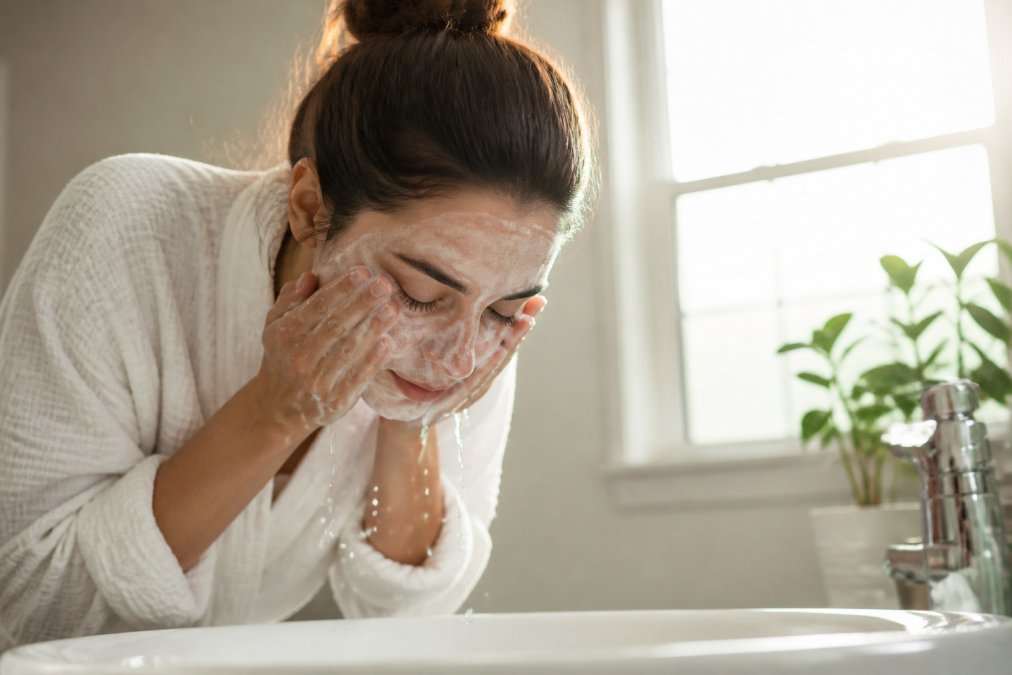
Cleanse (1-2 minutes): Use a gentle cleanser that removes oil and impurities without stripping skin. Massage into damp skin for 30-60 seconds, then rinse with lukewarm water and pat dry gently.
-
Treat (2-3 minutes): Apply a hydrating essence or lightweight serum, allowing one minute to absorb. If using a treatment serum, apply after hydration using one to two pumps.
-
Protect (2 minutes): Apply broad-spectrum sunscreen with SPF 30 or higher as the final step. Sun protection is the most important anti-aging step in any routine.
Evening Routine:
-
Cleanse (1-2 minutes): Use the same gentle cleanser as the morning to remove makeup, sunscreen, and daily accumulation.
-
Treat (2-3 minutes): Apply a treatment serum. Evening is ideal for active ingredients like retinol alternatives that may increase sun sensitivity.
-
Moisturize (2 minutes): Apply a richer moisturizer to support skin repair overnight. Look for ceramics, plant oils, or peptides.
Step 3: Select Treatment Products Based on Skin Type and Concerns
Choose one primary treatment serum addressing your main concern rather than layering multiple serums.
For dark spots and uneven tone (all skin types): Select serums containing niacinamide, turmeric, licorice root extract, or vitamin C. Apply one to two pumps and use consistently for 6-8 weeks before evaluating results.
For aging and fine lines (dry and normal skin types): Look for serums containing bakuchiol, peptides, or hyaluronic acid.
Step 4: Layer Products in the Correct Order
Apply products from thinnest to thickest consistency: cleanse, hydrating essence, treatment serum, moisturizer, then sunscreen (morning only). Wait 30-60 seconds between products to allow absorption and prevent pilling.
Step 5: Commit to Consistency and Avoid Common Mistakes
Most skincare ingredients require consistent use before visible improvements appear. Commit to a routine for at least six weeks before evaluating effectiveness.
Where to Order Cruelty-Free Skincare Online
Shopping for cruelty-free skincare online offers convenience and access to verified ethical brands. Reputable retailers filter products to ensure certifications are legitimate and current.
Common Mistakes When Shopping for Ethical Skincare
Even informed consumers make errors when building cruelty-free routines. Recognizing these pitfalls prevents wasted money and frustration.
Frequently Asked Questions
How can I verify if a skincare brand is truly cruelty-free?
Look for third-party certifications like Leaping Bunny, which guarantees no animal testing in product development or ingredient sourcing. Check the brand's supply chain transparency statement on their website, ethical companies disclose where ingredients come from. Read the label for phrases like 'not tested on animals' and 'certified cruelty-free.' Be cautious of brands owned by parent companies that test on animals, as this can affect the cruelty-free status. When ordering cruelty-free skincare online, verify certifications directly on the brand's site before checkout.
What's the difference between vegan and cruelty-free skincare?
Cruelty-free means no animal testing occurred; vegan means no animal-derived ingredients (like beeswax, lanolin, or collagen). A product can be cruelty-free but contain honey, making it non-vegan. Conversely, a vegan product might use ingredients tested on animals decades ago. Many ethical brands are both cruelty-free and vegan, offering clean beauty for consumers who prioritize animal welfare and sustainable sourcing. When shopping, check labels for both certifications if either matters to you.
Will cruelty-free skincare work as well as conventional brands?
Yes. Cruelty-free products deliver the same efficacy as conventional skincare when formulated with active ingredients like hyaluronic acid, vitamin C, and turmeric. Many dermatologist-tested cruelty-free options address acne-prone, sensitive, and aging skin effectively. The difference is the ethical sourcing and testing methods, not the performance. Blush Boutique's Turmeric Radiance Serum ($19.95) and Radiant Glow Essence with Hyaluronic Acid ($19.95) are suitable for all skin types, proving that clean beauty doesn't compromise results.
Is it more expensive to order cruelty-free skincare online?
Cruelty-free products often cost slightly more due to rigorous third-party testing, sustainable sourcing, and transparent supply chains. However, many affordable options exist. Blush Boutique offers cruelty-free serums and masks from $19.95 to $27.95, comparable to drugstore prices. Higher costs reflect ethical sourcing, not just branding. Calculate price-per-ounce and product longevity, a $22.95 mask used twice weekly can be a worthwhile investment for sensitive skin and conscious consumers.